
CorTec Announces Successful Second Human Implantation of Its Brain-Computer Interface (BCI) System
CorTec announced the successful second implantation of its Brain Interchange™ system in an FDA-approved clinical trial involving stroke patients. The trial, funded by the National Institutes of Health (NIH) under Award Number UH3NS121565, evaluates whether direct cortical electrical stimulation can enhance upper-limb motor recovery.
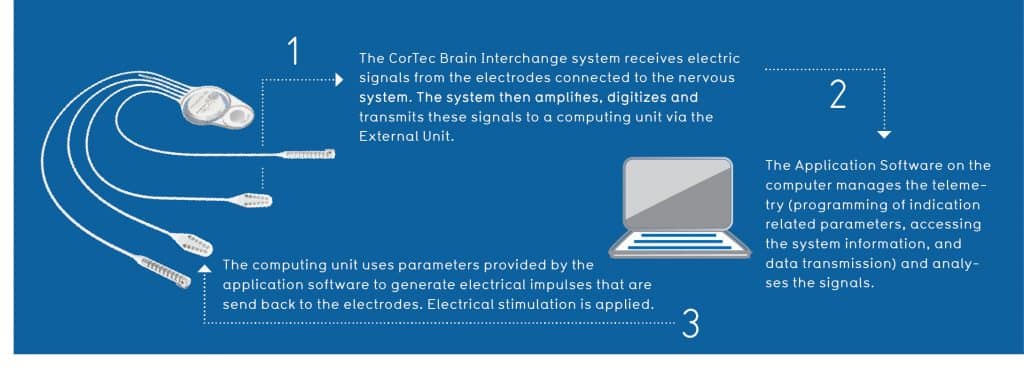
The Brain Interchange ONE is the first implantable version of CorTec's system technology available for clinical and pre-clinical research. As an investigational device, it is designed for both recording and stimulating on 32 channels with fully wireless functionality for chronic open- and closed-loop interaction with the nervous system.
A wireless subdural-contained brain–computer interface with 65,536 electrodes and 1,024 channels
Published in Nature Electronics, this research presents what Kampto Neurotech describes as the world's most volumetrically efficient neural implant, manufacturing neural interfaces "the way NVIDIA makes GPUs — on silicon wafers at scale."
Animal Testing Results: The device provided chronic, reliable recordings for up to two weeks in pigs and up to two months in behaving non-human primates from the somatosensory, motor and visual cortices.
OpenAI invests in Sam Altman's brain computer interface startup Merge Labs
OpenAI-backed firm to use ultrasound to read minds. Does the science stand up?
In January 2026, OpenAI invested in Merge Labs, a brain-computer interface startup co-founded by Sam Altman that aims to rival Elon Musk's Neuralink using ultrasound rather than implanted electrodes. A month later, Nature published a scientific analysis questioning whether the approach is based on solid science.
Additional Investors: Bain Capital, Interface Fund, Fifty Years, and video game developer Gabe Newell.
Co-founders:
- Sam Altman: OpenAI CEO
- Alex Blania & Sandro Herbig: Tools for Humanity (Worldcoin)
- Tyson Aflalo & Sumner Norman: Forest Neurotech
- Mikhail Shapiro: Caltech researcher
Your Life Powered by Neurable: The Future of Cognitive Performance
Neurable offers a consumer-facing approach to BCI technology through premium headphones embedded with EEG sensors—no surgery required.
The MW75 Neuro LT combines active noise-cancelling wireless headphones with soft fabric EEG sensors and proprietary AI to track focus and interpret brain activity.
Measured Metrics:
- Mental Recovery Score: Daily rating of how well-rested the brain is
- Brain Age: Weekly rating comparing brain health to chronological age
- Cognitive Strain: Real-time tracking of mental workload
- Cognitive Speed: Processing efficiency metrics
- Anxiety Resilience: Stress response patterns
We Induced Smells With Ultrasound
Researchers claim to have achieved the first-ever ultrasound stimulation of the human olfactory bulb, inducing artificial scent sensations without chemical odorants.
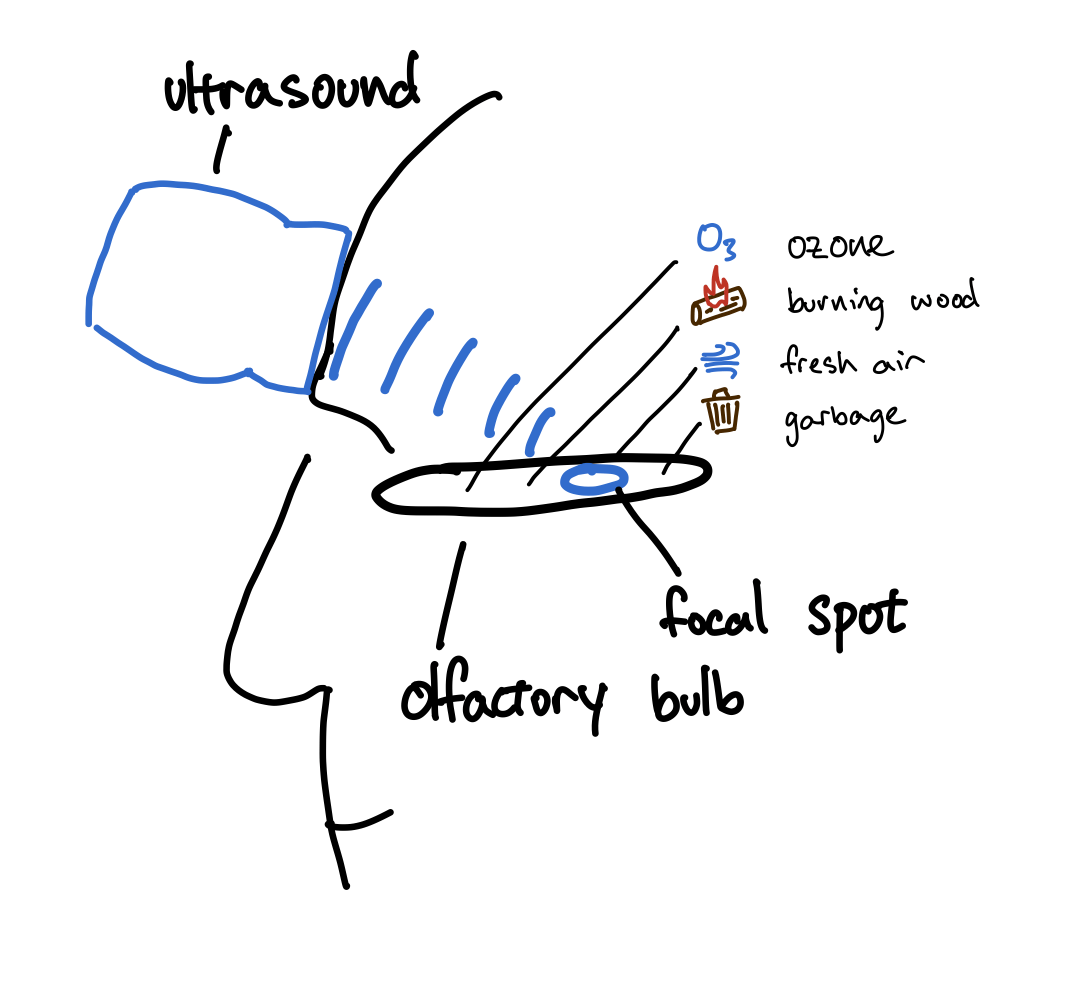
Induced Sensations:


Technical Parameters:
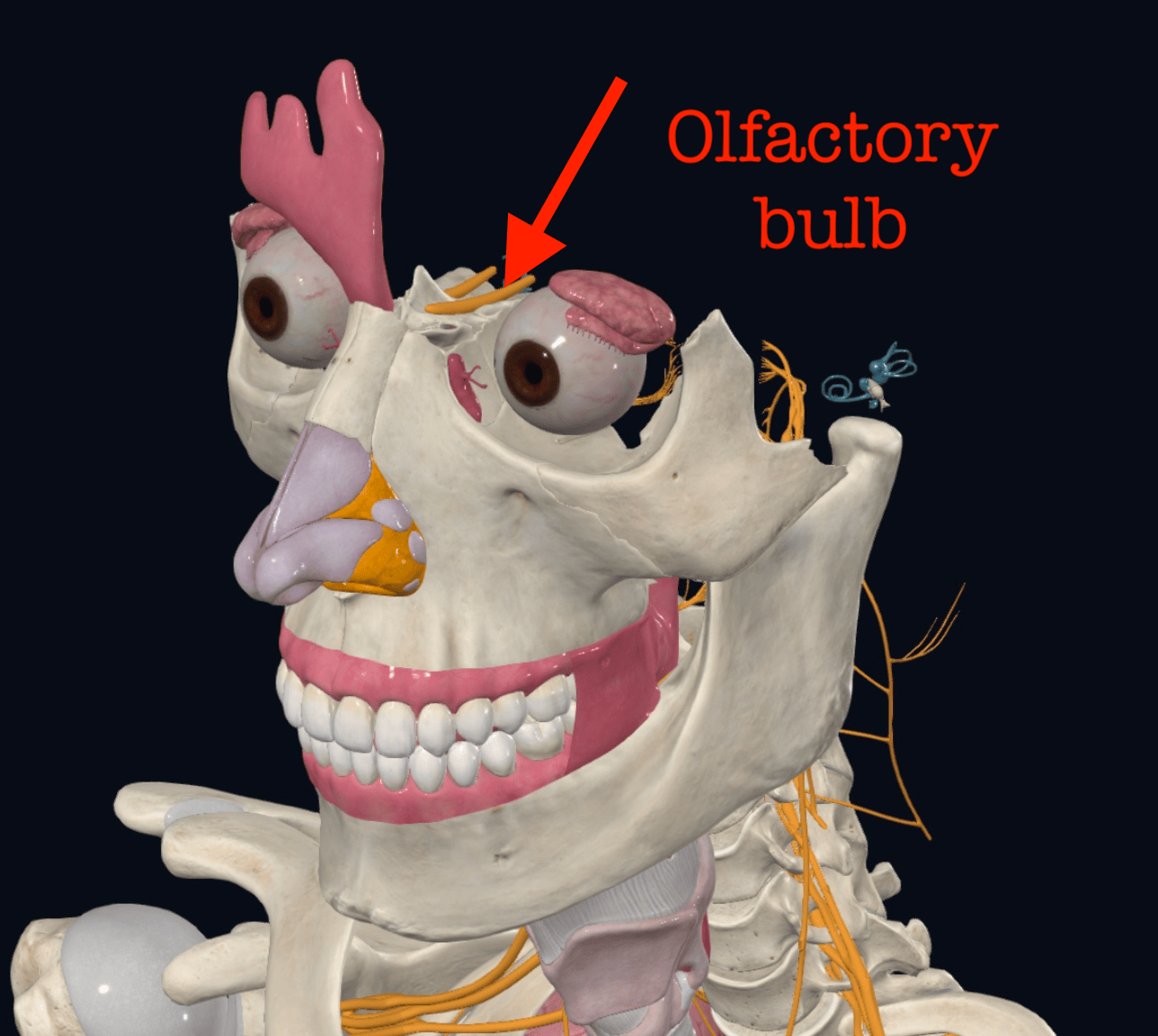
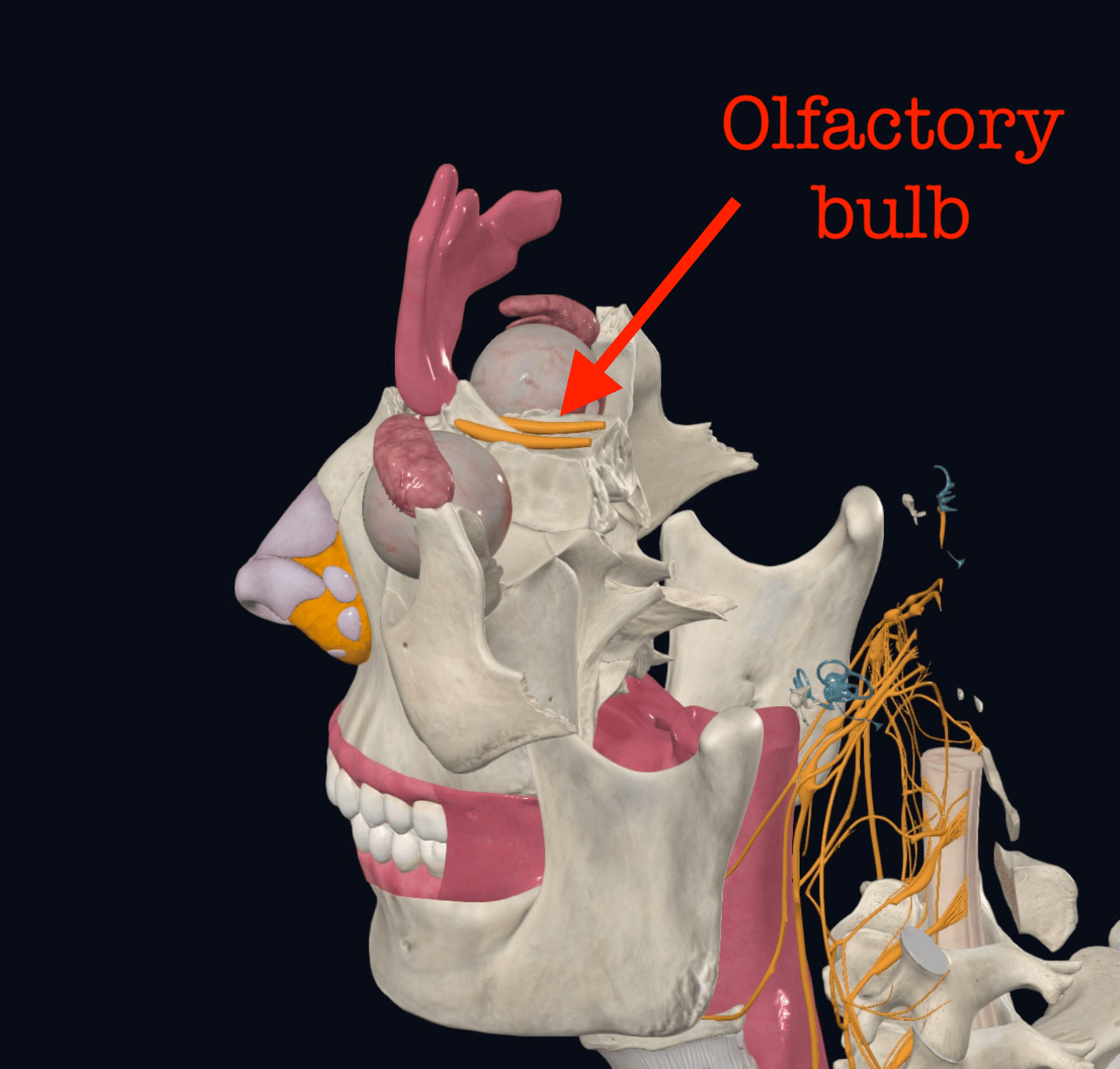
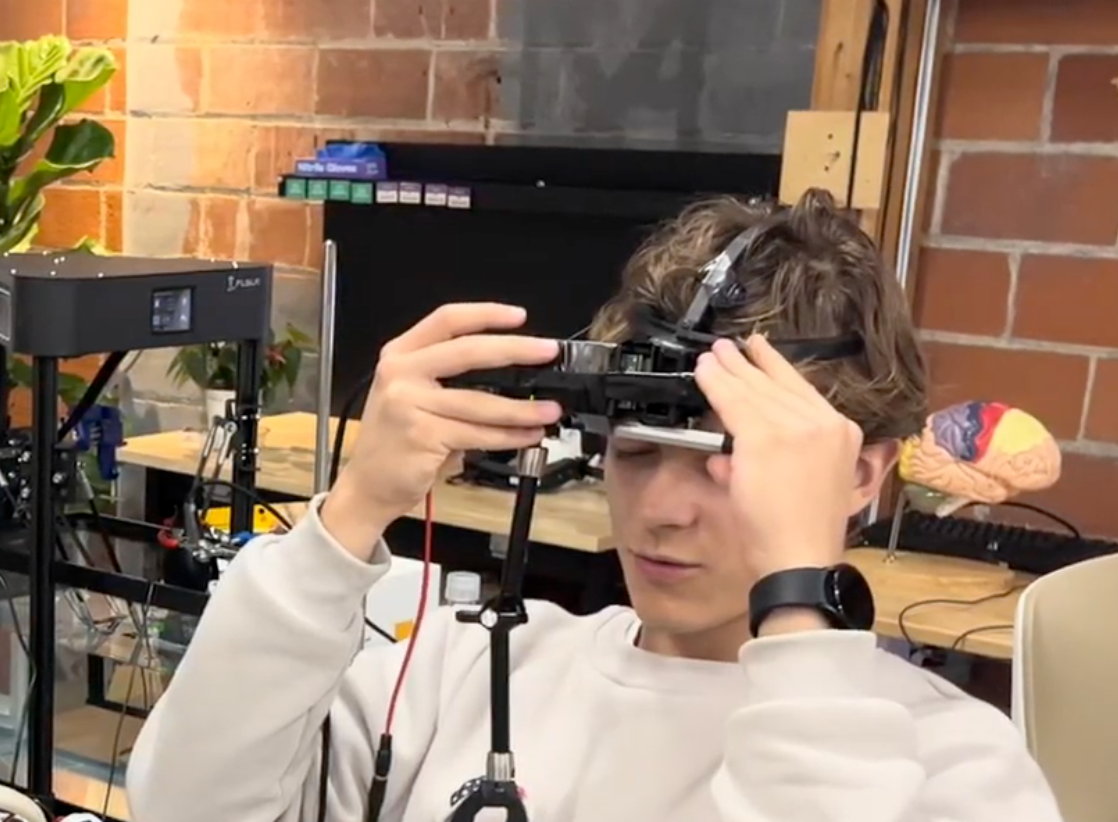
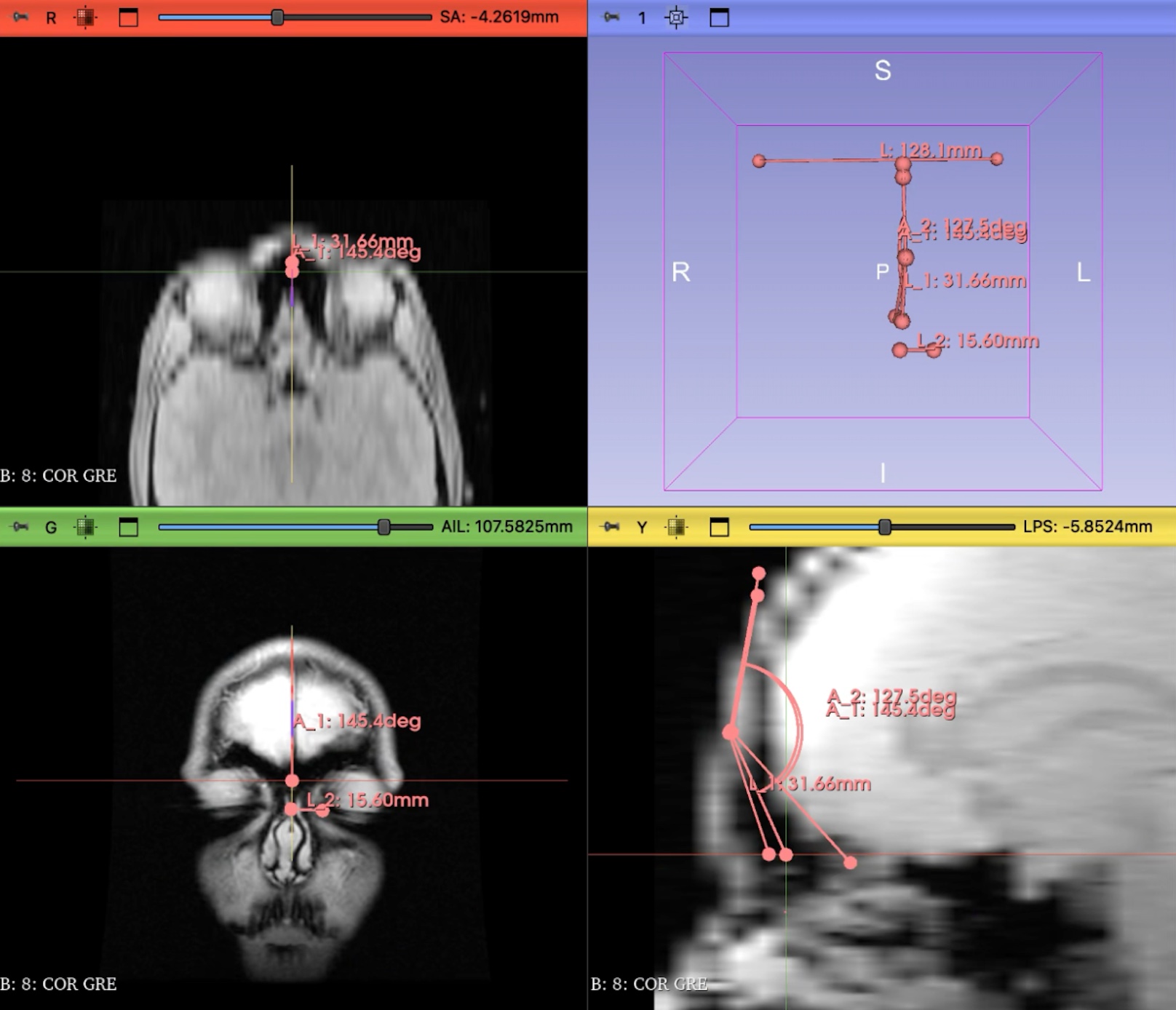
Note: This research has not been independently peer-reviewed at time of publication.
Paradromics Receives FDA Approval for the Connect-One Clinical Study
Paradromics announced FDA approval for its Connect-One clinical study, representing a major milestone for speech-restoring BCI technology. The Connexus® Direct Data Interface collects brain signals to enable communication and computer control for people with severe motor impairment.
Previous Achievement: Paradromics previously demonstrated the ability to decode speech in real-time from a person with ALS using their BCI device.
Synchron Raises $200M to Accelerate Stentrode BCI Platform
Synchron, developer of the Stentrode™ endovascular brain-computer interface, announced a $200 million Series D financing to advance its BCI technology toward commercialization. Unlike invasive BCI approaches, Synchron's device is inserted via the jugular vein and requires no open brain surgery.
Clinical Results: Data has shown that Stentrode consistently enables people with severe paralysis to text, email, browse the internet, and interact with digital devices hands-free. The device is implanted via a minimally endovascular procedure similar to stent placement.
Precision Neuroscience: High-Bandwidth BCI Without Open Surgery
Precision Neuroscience published the first human study of its Layer 7 Cortical Interface, demonstrating that high-bandwidth brain-computer interfaces can be achieved without open brain surgery. The study reports on the first five human patients implanted with the device.
Technology: The Layer 7 Cortical Interface is an ultra-thin, flexible electrode array that sits on the surface of the brain. It can be implanted and removed without damaging brain tissue. The company plans to insert a permanent implant in a human by 2026.
Mind-reading devices can now predict preconscious thoughts: is it time to worry?
As BCIs advance from laboratory to consumer product, Nature examined the implications of devices that can decode neural activity before it reaches conscious awareness.
Open Questions
- Preconscious prediction: Nature reported on devices that can predict preconscious thoughts — what are the privacy implications?
- Equity: Will cognitive enhancement technologies create new forms of inequality?
- Therapeutic vs. enhancement: Where is the line between restoring function and augmenting capability?
- Regulatory lag: Can oversight frameworks keep pace with rapidly evolving neurotechnology?
Toward Distributed Intimacy: BCIs and the Literary Imagination
The contemporary BCI landscape evokes a future that electronic literature and speculative fiction have long anticipated: a realm where consciousness extends beyond the skull, where biometric states transmit across networks, and where intimacy becomes a technological protocol. The devices catalogued in this digest—implantable ECoG arrays, endovascular stentrodes, ultrasound neuromodulators—represent not merely medical interventions but the infrastructure for what Samuel R. Delany, William Gibson, and Octavia E. Butler variously imagined as shared sensory collectivities.
The SimStim Paradigm: Gibson's Broadcast Sensoriums
In William Gibson's Neuromancer (1984), SimStim (Simulation Stimulation) technology enables the direct broadcast of one person's complete sensory experience to another. Fitted with broadcast rigs and dermatrode tiaras, "simstim stars" like Tally Isham record their sensoriums for mass consumption—edited, packaged, and replayed through decks that feed directly into the nervous system. The console cowboy Case, jacked into cyberspace, can flip a switch and inhabit the body of his mercenary partner Molly Millions, seeing through her Zeiss Ikons, feeling her pain, riding her adrenaline.
What Gibson anticipated was not merely virtual reality but intercorporeal telepresence—the technological dissolution of the body's boundaries. Today's BCI researchers pursue similar horizons: Neurable's EEG headphones track cognitive states for remote monitoring; CorTec's Brain Interchange enables closed-loop neural dialogue between implant and external systems; Merge Labs aims to "bridge biological and artificial intelligence." The SIMSTIM cassettes of Gibson's Sprawl have become our cloud-stored biometric data streams, our Fitbit quantified selves, our impending neural Facebooks.
Direct Neural Stimulation: Butler's Ooloi and the Language of Experience
Octavia E. Butler's Xenogenesis trilogy (1987–1989) offers a more radical vision of neural interpenetration. The alien Oankali—traders in genetic material and consciousness—communicate through their ooloi, third-sex genetic engineers who possess "sensory arms and tentacles" capable of direct neural stimulation. Through these appendages, ooloi can share entire experiences, sensations, and emotions without the mediation of language—what the Oankali call their "sensory language."
The ooloi interpenetrate their partners' nervous systems, stimulating pleasure centers, sharing memories, and creating what Butler terms "body stream sensual collectivities"—minglings of consciousness in a shared substrate. This is not merely communication but communion: the dissolution of individual boundaries into temporary collective minds. WritetoBrain's ultrasound olfactory stimulation represents an early technological echo of this capability—artificially inducing sensory experience through targeted neural modulation, bypassing the chemical odorants that normally mediate smell.
Butler's vision carries ethical weight that contemporary BCI discourse often neglects. The Oankali's neural intimacy is never purely consensual; their sensory language operates through penetration, through the rewriting of neural pathways. As BCIs advance toward therapeutic applications for trauma and depression, we might ask: what forms of "healing" might also constitute forms of cognitive colonization? The ooloi offer both cure and capture—the paradox of intimate technology.
Stars in My Pocket: Delany's Cultural Fugue and the Politics of Interface
Samuel R. Delany's Stars in My Pocket Like Grains of Sand (1984) presents a universe where "erotic technology" enables complex mediations of desire, where the Web (a space-based information network anticipating our own internet) facilitates connections across vast distances, and where Cultural Fugue—the catastrophic destruction of entire planetary civilizations—looms as the constant risk of technological overreach. Delany's characters navigate a galaxy of radical difference, where interspecies communication requires prosthetic mediation and where desire itself becomes a technological construction.
The novel's treatment of "job1" and "job2"—the split between vocation and day labor—anticipates the gig-economy dimensions of contemporary neurotechnology. As BCIs transition from medical necessity to consumer enhancement (Neurable's consumer headphones, Merge Labs' $850 million valuation), we witness the emergence of what we might call cognitive capitalism: the extraction of value from neural processes themselves. The brain becomes both interface and product, its electrical signatures commodified as "focus scores" and "brain age" metrics.
Electronic Literature as Trajectory and Trauma
Electronic literature—works like Shelley Jackson's Patchwork Girl (1995) and Michael Joyce's afternoon, a story (1990)—has long explored what it means to read non-linearly, to construct narrative through choice architectures, to experience text as a distributed, multi-threaded cognitive event. These hypertext fictions require readers to navigate branching paths, to construct coherence from fragmentation, to experience narrative as a process of active world-building rather than passive consumption.
BCI-mediated fiction promises to extend this trajectory into direct neural narration. Imagine interactive fictions that respond not to mouse clicks but to amygdala activation, stories that branch based on the reader's emotional state, therapeutic narratives that rewrite traumatic memories through guided neural reconsolidation. The "romance trajectory weaving journeys through shared sharded brain-space" becomes technically conceivable: two lovers linked by bidirectional BCIs, sharing not merely thoughts but the felt texture of consciousness, constructing collective dreamscapes in real-time neural collaboration.
Yet we must attend to the trauma inflected in such intimacies. The history of electronic literature is also a history of technological failure, of obsolete platforms and unreadable files, of the digital's ephemerality. As we contemplate permanent neural implants—Kampto's 65,536 electrodes, Paradromics' 10,000 channels—we should ask: what happens when the interface becomes indistinguishable from the self? What forms of forgetting become impossible when experience is recorded, broadcast, shared? The distributed theatre of BCI-mediated performance offers radical new forms of collective presence, but it also threatens to dissolve the boundaries between self and other, between authentic experience and technologically mediated sensation, in ways we are only beginning to comprehend.
The science fiction precursors remind us that these technologies carry political weight. Gibson's console cowboys hacked corporate databases; today's BCI startups seek to hack consciousness itself. Butler's ooloi offered transformation at the cost of species identity; our neural interfaces promise enhancement at the cost of cognitive privacy. Delany's Web enabled connection across unimaginable distance; our brain-cloud interfaces risk reducing interiority to yet another data stream in the attention economy.
As the devices catalogued in this digest move from laboratory to clinic to consumer market, we would do well to remember that every interface is also a boundary, every connection a potential capture, and every shared brain-space a territory contested between liberation and control.
Works Cited
Butler, Octavia E. Dawn. New York: Warner Books, 1987. https://www.academia.edu/25342726/DAWN_Book_one_of_the_Xenogenesis_series
———. Adulthood Rites. New York: Warner Books, 1988.
———. Imago. New York: Warner Books, 1989.
———. Lilith's Brood. New York: Warner Books, 2000. [Omnibus edition of Xenogenesis trilogy]
Delany, Samuel R. Stars in My Pocket Like Grains of Sand. New York: Bantam Books, 1984. Critical analysis at Reactor Mag
Gibson, William. Neuromancer. New York: Ace Books, 1984. SimStim Wiki
Jackson, Shelley. Patchwork Girl; or, a Modern Monster. Watertown, MA: Eastgate Systems, 1995. Electronic Literature Organization
Joyce, Michael. afternoon, a story. Watertown, MA: Eastgate Systems, 1990. Wikipedia Entry
"Afternoon, a Story." Wikipedia. Accessed February 17, 2026. https://en.wikipedia.org/wiki/Afternoon,_a_story
"Dawn Discussion Questions." Bookey. Accessed February 17, 2026. https://www.bookey.app/book/dawn/qa
"Like Pop Rocks for the Brain: Samuel R. Delany's Stars in My Pocket Like Grains of Sand." Reactor Mag (formerly Tor.com), February 19, 2009. https://reactormag.com/like-pop-rocks-for-the-brain-samuel-r-delanys-stars-in-my-pocket-like-grains-of-sand/
"Patchwork Girl (hypertext)." Wikipedia. Accessed February 17, 2026. https://en.wikipedia.org/wiki/Patchwork_Girl_(hypertext)
"Shelley Jackson: Patchwork Girl." Electronic Literature Organization. Accessed February 17, 2026. https://eliterature.org/Awards2001/fiction-JacksonShelley.php
"SimStim." William Gibson Wiki. Accessed February 17, 2026. https://williamgibson.fandom.com/wiki/SimStim
"Stars in My Pocket Like Grains of Sand." Wikipedia. Accessed February 17, 2026. https://en.wikipedia.org/wiki/Stars_in_My_Pocket_Like_Grains_of_Sand
"Xenogenesis." Octavia E. Butler. Accessed February 17, 2026. Critical scholarship on Oankali neural communication. https://www.jstor.org/stable/25746440
BioSpace. "Precision Neuroscience Reports First High-Bandwidth Brain-Computer Interface Achieved Without Open Surgery." Press release, October 2, 2025. https://www.biospace.com/press-releases/precision-neuroscience-reports-first-high-bandwidth-brain-computer-interface-achieved-without-open-surgery
CorTec GmbH. "Brain Interchange System." Product documentation. Accessed February 17, 2026. https://cortec-neuro.com/brain-interchange-system/
CorTec GmbH. "CorTec Announces Successful Second Human Implantation of Its Brain-Computer Interface (BCI) System." EQS News, February 10, 2026. https://www.eqs-news.com/news/corporate/cortec-announces-successful-second-human-implantation-of-its-brain-computer-interface-bci-system/9df42040-9726-41ae-a28c-271387255c58
Kampto Neurotech. "A wireless subdural-contained brain–computer interface with 65,536 electrodes and 1,024 channels." Nature Electronics, December 2025. DOI: 10.1038/s41928-025-01509-9. https://www.nature.com/articles/s41928-025-01509-9
MobiHealthNews. "Brain-Computer Interface Company Synchron Raises $200M." November 6, 2025. https://www.mobihealthnews.com/news/brain-computer-interface-company-synchron-raises-200m
Nature. "OpenAI-backed firm to use ultrasound to read minds. Does the science stand up?" February 2026. DOI: 10.1038/d41586-026-00329-x. https://www.nature.com/articles/d41586-026-00329-x
Neurable, Inc. "Your Life Powered by Neurable: The Future of Cognitive Performance." Product documentation. Accessed February 17, 2026. https://www.neurable.com/products/how-to-neurable
Paradromics. "Paradromics Receives FDA Approval for the Connect-One Clinical Study with the Connexus Brain-Computer Interface." Press release, November 20, 2025. https://www.paradromics.com/news/paradromics-receives-fda-approval-for-the-connect-one-clinical-study-with-the-connexus-brain-computer-interface
TechCrunch. "OpenAI Invests in Sam Altman's Brain Computer Interface Startup Merge Labs." January 15, 2026. https://techcrunch.com/2026/01/15/openai-invests-in-sam-altmans-brain-computer-interface-startup-merge-labs/
WritetoBrain. "We Induced Smells With Ultrasound." Research blog, January 2025. https://writetobrain.com/olfactory