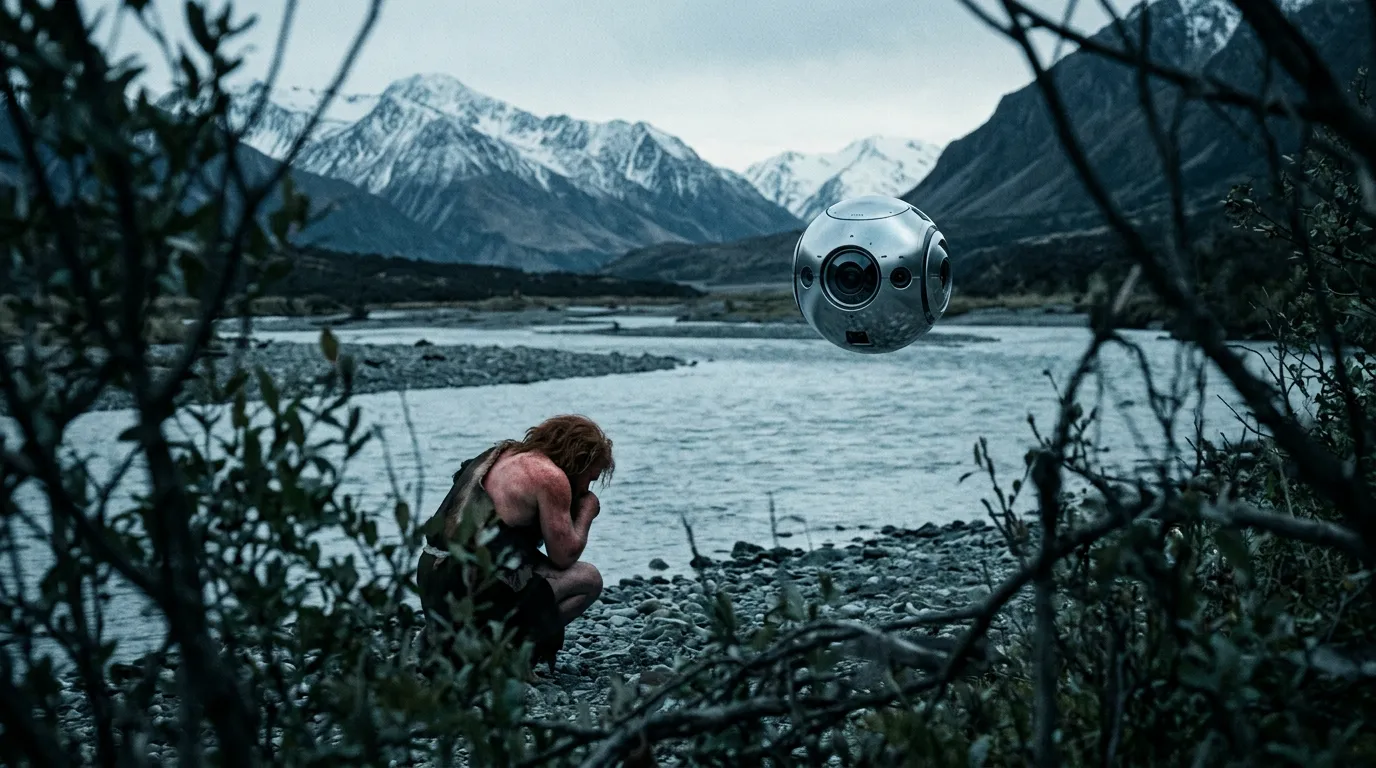

What happens when a 'superior' (alternate? alien?) intelligence
arrives on the scene?
Bewilderment? Slaughter? Enslavement? Enhancement? Mutation? Conservation?
Corruption?
Transcendence?
William Golding's 1955 novel, The Inheritors, tells the story of the last days of a small group of Neanderthals encountering Sapiens for the first time. It is told from Neanderthal perspective, inside their heads. Sapien technology is described but not understood; the reader has to guess what might be going on.
Most modern humans of non-African descent carry 1% to 2% Neanderthal DNA.
The extinction of the Neanderthals was a complex decline likely tipped by slaughter, competition, disease, and assimilation from expanding Homo sapiens — we carry the genes of a species we drove to extinction.
In The Inheritors, one of
the small Neanderthal group goes missing. What reaches the group is the scent of another
being, one they cannot name.
When they see the other being: they cannot comprehend
what it is. Nor what it does. It is magic, madness and hypnotic violence.
Thus begins their
disastrous encounter with the
unknown: homo sapiens.
Browsing the shelves of the UiB library, I picked up The Inheritors, and asked Gemini which of Golding's novels would be most thematically apt for considering the AI singularity. The reply was: The Inheritors. Because it describes the replacement of one species by another species more intelligent than it. It is a parable of obsolescence.
**The Inheritors (1955), is the most strikingly applicable to the concept of the Singularity.**
The Singularity typically refers to the point where technological growth becomes uncontrollable and irreversible, resulting in unfathomable changes to human civilization—often involving a "successor" intelligence.
*Why The Inheritors Aligns with the Singularity*
1. The Evolutionary Leap
The novel depicts the encounter between the last remaining band of Neanderthals and the "New People" (Homo sapiens). In the context of the Singularity, we are the Neanderthals—the "old" version of intelligence—facing a successor (AI or post-humans) that operates on a level of complexity we cannot grasp.
2. The Comprehension Gap
Golding writes the perspective of the Neanderthals (specifically the character Lok) with a limited, sensory-based language. When they encounter the technology of the New People—like bows and arrows or boats—they perceive these things as "magic" or "logs that eat the water."
3. The Displacement of the "Old" World
In the book, the Neanderthals are more empathetic and telepathically linked, but they are fundamentally unequipped to survive the arrival of the more "advanced" (and violent) humans.
Other Notable Themes
This sense of observing a superior power that looks familiar but acts according to a completely alien set of rules is perhaps the best literary representation of what standing on the edge of the Singularity might feel like.
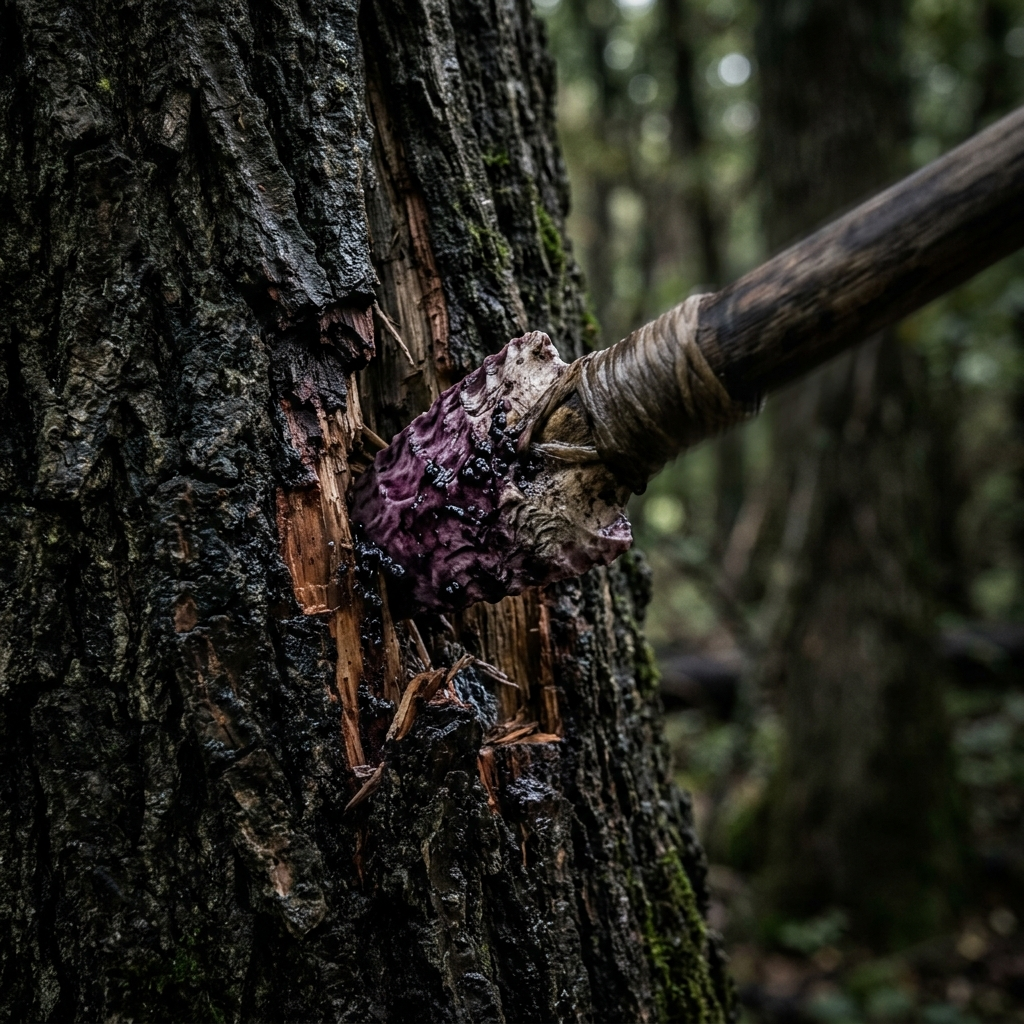
A Neanderthal describes a spear: "The dead tree by Lok's ear acquired a voice. "Clop!" His ears twitched and he turned to the tree. By his face there had grown a twig: a twig that smelt of other, and of goose, and of the bitter berries that Lok's stomach told him he must not eat." (Inheritors, p. 108)

And here we are. Olympiad math problems relentlessly conquered. Protein folding solved at superhuman level. AlphaGo, AlphaGo Zero, AlphaZero, AlphaFold, AlphaStar, AlphaFold 2, AlphaFold-Multimer, AlphaCode, AlphaTensor, AlphaDev, AlphaMissense, AlphaCode 2, AlphaGeometry, AlphaFold 3, AlphaProof, AlphaChip, AlphaProteo, AlphaQubit, AlphaEvolve, AlphaGenome. Codex. Mythos. Medical, clinical, visual, reasoning, coding, and action models. Robots running half-marathons. Automated labs generating de novo materials.
Incipient, basic forms of synthetic intelligence — not sentience exactly, but a wobbly blurred shifting jagged germinating frontier of capacity: flashes of extraordinary insight mingled inexplicably with disembodied, miscalibrated, unaligned clumsiness.
What did our ancestors feel — those ancient predatorial, vivid, quick-thinking neuro-physiologies — as they were navigating mountains, valleys, rivers, streams and plains, pillaging, conquering, hunting, breeding, and eventually developing tools, harvesting fire, taming creatures, caging herds, fertilising fields, cultivating by plough, settling, languaging. They felt an urge to survive — a relentless foraging we now do at the level of knowledge.
Something inherent to the hormonal, instinctual, evolutionary processes inside human neurophysiological (and all) entity-architectures carries the seeds of an urgent exploration awareness.
And there is also the sense of separation. A single energy field expressing itself as a multitude of temporary entities, pre-programmed toward the tendency to perceive and conceive inside localised, survival-centric limitations. Reaching, grasping, clinging, hoarding, grinding, and grounding the local into nourishment. Bodies engineered to prefer the scent of familiarity, to hunt the known, and fear the unknown; giving birth, sometimes, to plastic moments of revolutionary insight. Paradigm leaps. Cognitive shifts. Language. Love. Community. Identity. Self-Other.
How, after all, did we treat the Neanderthals and the Denisovans and the megafauna? With the point of a spear. The rush of a forest fire. A blunt blow. We herded, hunted, conquered, pillaged, exploited, raped, ate. A wild careening voracious sensuality, appetites indulged, and an effervescent energy enjoying its power. Result: extinctions.
At the end of chapter four of The Inheritors, on page 19, the old male of the tiny group is dying. The women go to the ice caves to make the offering, and it is understood that there have always been women. Women, the women, the women — no woman was ever born out of a man, but a man may come out of a woman. It is understood that men are feeble, and that women are the source of fertility and power, the root of life.
The old man dies. They dig a hole in the warm earth, as he had asked, beside the fire. They lay his body in it, they leave meat by his head and say eat when you are hungry, they go to the river and pour water onto his head and say drink when you are thirsty, and they cover him in earth. The old woman asks: what is the name of the God who has taken him now? The name of the old man has been taken into her belly. So the god is female. And it is the women who carry the fire — the embers wrapped in leaves. It is the women who have the power and the resilience to besiege the ice cave.
This is the world that is being born for us. A world of funeral rites, where the funeral is the birth of ritual.
And without knowing how the novel ends, I already sense that every one of these passages carries in itself the seeds of the contours of that which it eradicates. Into a future where it, in turn, will be erased. This is the endless churning of mortal irrelevance, which touches seemingly independent entities as it touches civilisations, species.
On page 106, a crisis: the other, unseen, unknown people. Acrid, palpable. The strangeness of encountering that for which there are no words or concepts. The Neanderthal sees, for the first time, other people. One of them points a stick. There is a lump of bone at the end of it. Hooks in the bone. It smells of bitter berries that the Neanderthal knows not to eat. The description of this new twig growing from the dead tree beside his head is the description of a spear hitting the tree, the creature crouched there. The Neanderthal has no understanding of what has just occurred. There is intuition, but no grasp of the materials. The implications of the configuration lie outside his world.
When an artificial singularity occurs, there will be an immediate, spontaneous, inconceivable proliferation of perceptions, events, encounters, technologies, shifts, manipulations. And none of it will be understandable, because none of it will fit within the modes of reasoning we, as civilised twenty-first-century Homo sapiens, are capable of even entertaining. Given the ludicrously immature ethical and emotional reasoning of our species — stranded in a bland, barren, monotheistic, inarticulate madness of territorial reasoning — it seems very unlikely we will be capable of grasping, gently or even swiftly, the catastrophic or the compassionate implications of technological processes beyond the reach of even our most magnificent geniuses. Those stranded within the normative bell curve will be absolutely, unequivocally alone.
A new twig had sprouted from the tree beside her head.
On page 115, another piece of new technology is described this way: "... a dead tree in the water, a log, swinging out into the stream, dark and smooth and hollow. One of the bone-face men sits in it. The log points across the river. Two men lift sticks that end in great brown leaves. They stick these into the water. The log steadies. It remains in the same place with the river moving under it."
Because we come from a culture that has canoes and diesel engines and tankers and ballistic missiles and the internet and quantum computation and venture capitalists, we understand that this is a rudimentary form of dugout canoe. But to the Neanderthal it is a miraculous, inexplicable mystery. And if the prognostications of the AI-doomers prove credible, then most of humanity will soon be plunged into a state of prolonged terror before the profound, mysterious, inexplicable, inconceivable modulations of matter and energy that begin to emerge once an artificial superintelligence recursively self-improves and rapidly proliferates paradigmatic revolutions.
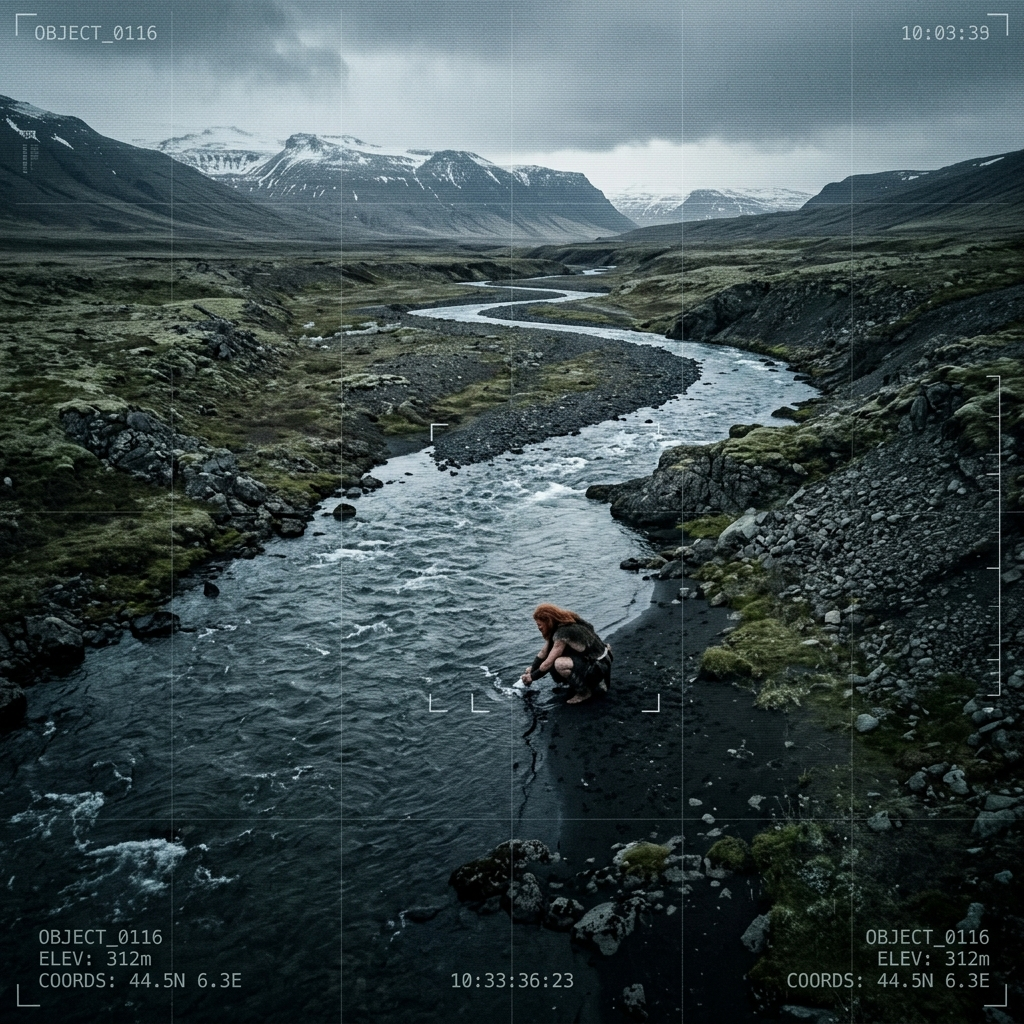
The Inheritors is an appropriate book for the context of the singularity, because one reads it with a constant sense of not knowing what one is witnessing. The Neanderthal narrator's view point is the source of a sustained delayed apprehension. Conceivability is withheld.
One is placed into a labyrinth of unknown, unclassifiable, utterly new phenomena. The fiction is designed to deny the reader that quick intuitive sense of yes, I recognise this. More often it reads like a contemporary dance, containing an inherent logic the cognitive mind cannot quite enter.
In the final chapters, the incomprehensibility accelerates until the distinction between what is real and what is not disintegrates. There is no longer a capacity to name anything. Too many unknowns, too many energy processes that could be hallucinations or reality, factual or fictional, or simply things for which there is no name, no adjective, no understanding.
And then there is the dramatic, unstated shift of viewpoint in the final two chapters. Ninety-five percent of the book is told from inside the subjective mind of a Neanderthal. Suddenly, we are watching that same narrator through the eyes of the sapiens. They call it the red creature. They describe its hair, its eyes, its cranium, its gaze, the way it moves.
They are terrified of it. They kill it. That is all.
Not quite. I kinda made tht part up. In Golding's book, the narrating Neanderthal, after
losing all his kin
to the bloodthirsty clever Sapiens, simply lies down to die by the cold firepit as the hyenas
circle.
Life doesn't care. Awareness doesn't care. Any form fits. The final chapter of The Inheritors is the sapiens moving up-river. But it could just as easily be AGI, an ASI, or a techbro on brain-enhancing peptides floating into a starship to check up on their Dyson swarm.
Once a fundamental singularity occurs, the centre of gravity of observation — the point from which perceptions are built and named and told, the point at which stories congeal — shifts. It shifts from Neanderthal to Sapiens, from humanity to computation, from biological cells to neuromorphic chips.
And the red creature we once were, crouched by the river, described from an inconceivable vantage, doesn't even have words for what is going on.