
tl;dr
Civilization is not failing morally. It is optimizing the wrong feedback.
What follows proposes changing the control parameters — what gets measured, rewarded, and felt — until cooperation becomes the locally rational choice. Not imposed harmony. Planetary feedback.
The argument moves in five arcs: diagnose the misalignment, grow a planetary nervous system, rewire the domains, cultivate the conditions, and induce the shift — without waiting for saints, and without asking incumbents for permission.
Map
Part I — Diagnosis
1. From Control Parameters to Cooperative Attractors
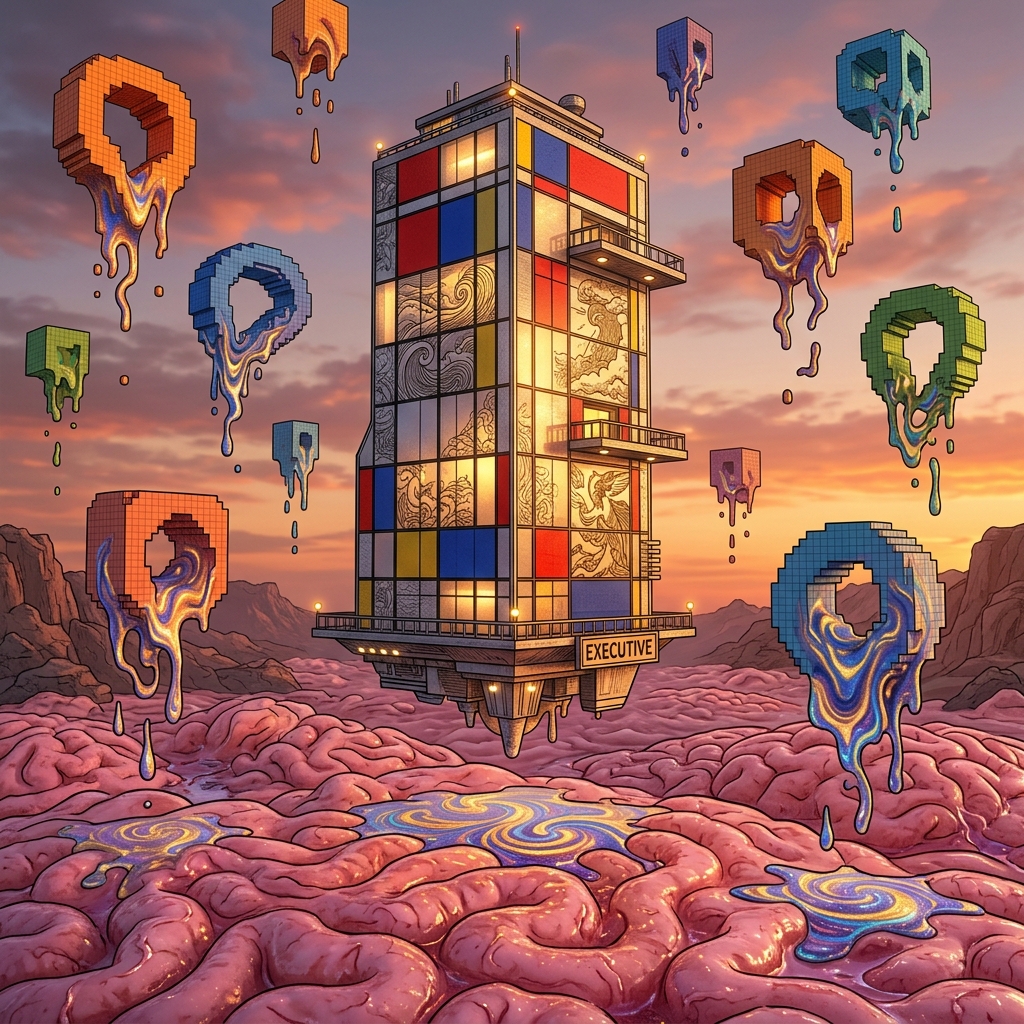
How do interdependent agents align through shared feedback rather than imposed control?
- Economics calls them incentives.
- Physics calls them order parameters.
- Cybernetics calls them feedback loops.
- Biology calls them selection pressures.
- Complexity science calls them attractors.
- Computer science calls them objective functions.
- Spiritual traditions call them habits of attention.
The words differ. The pattern repeats.
Systems become what their feedback rewards.
Civilizations become what their institutions make easy.
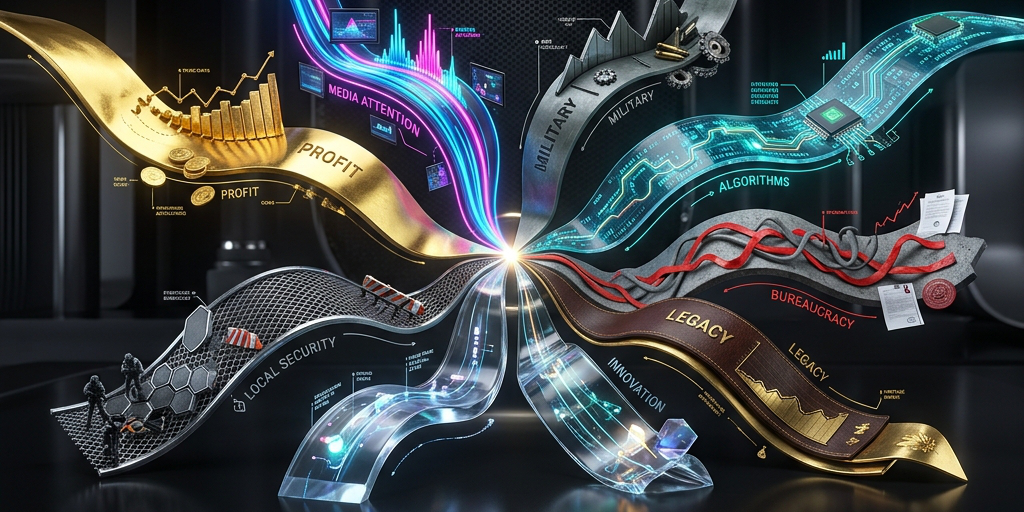
- Media optimize attention.
- Markets optimize exchange.
- Algorithms optimize engagement.
- Individuals optimize local security.
- Corporations optimize quarterly profit.
- Politicians optimize election probability.
None optimize biospheric resilience.
None optimize flourishing for all sentient beings.
The result is not mysterious. Civilization behaves exactly as expected.
It optimizes what it measures.
It panics where it has no margin.
It destroys what it externalizes.
It hoards where it expects scarcity.
The crisis is not merely moral failure.
It is optimization misalignment.
- Alignment can be innate.
- That is biology.
- Alignment can be imposed.
- That is command.
- Alignment can be coerced.
- That is domination.
- Alignment can be emergent.
- That is feedback.
The highest art is not forcing agents to agree.
It is shaping conditions where cooperation becomes intelligence.
2. From Nation-States to Living-Systems Thinking

What if the relevant unit is not the nation, but the living system that contains nations?
Imagine Earth as one distributed organism. Not a metaphor only. A functional description.
- Cells compete.
- Cells exchange.
- Cells specialize.
- Cells die.
But multicellular life persists because local competition is constrained by organism-level feedback.
Cancer is local optimization escaping whole-body regulation.
- Oligarchy resembles this.
- Ecological overshoot resembles this.
- Attention extraction resembles this.
- Unaligned AI races resemble this.
Not morally. Mathematically.
Capitalism's objectives no longer align with planetary feedback.
Part II — Architecture
3. From Institutional Fragments to a Planetary Nervous System
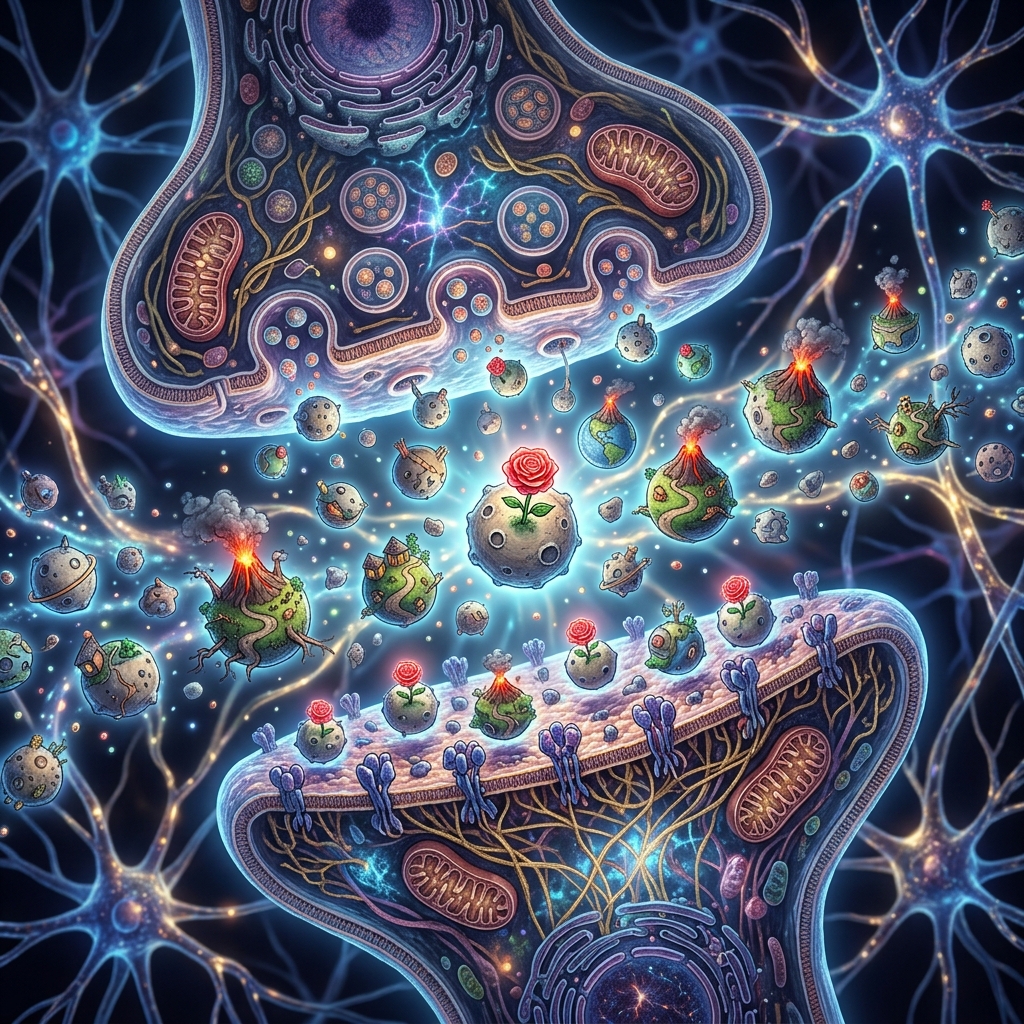
What living feedback layer would let Earth sense, regulate, and repair itself?
- Humanity has law.
- Humanity has markets.
- Humanity has science.
- Humanity has satellites.
- Humanity has the internet.
- Humanity has AI.
What it lacks is a nervous system.
Not surveillance. Not command. Not a world state. Homeostasis.
A body regulates:
- Temperature.
- Glucose.
- Oxygen.
- Waste.
- Repair.
The body does not eliminate conflict. It keeps conflict compatible with life.
Humanity has yet to evolve this layer.
4. From World Government to Planetary Homeostasis Network
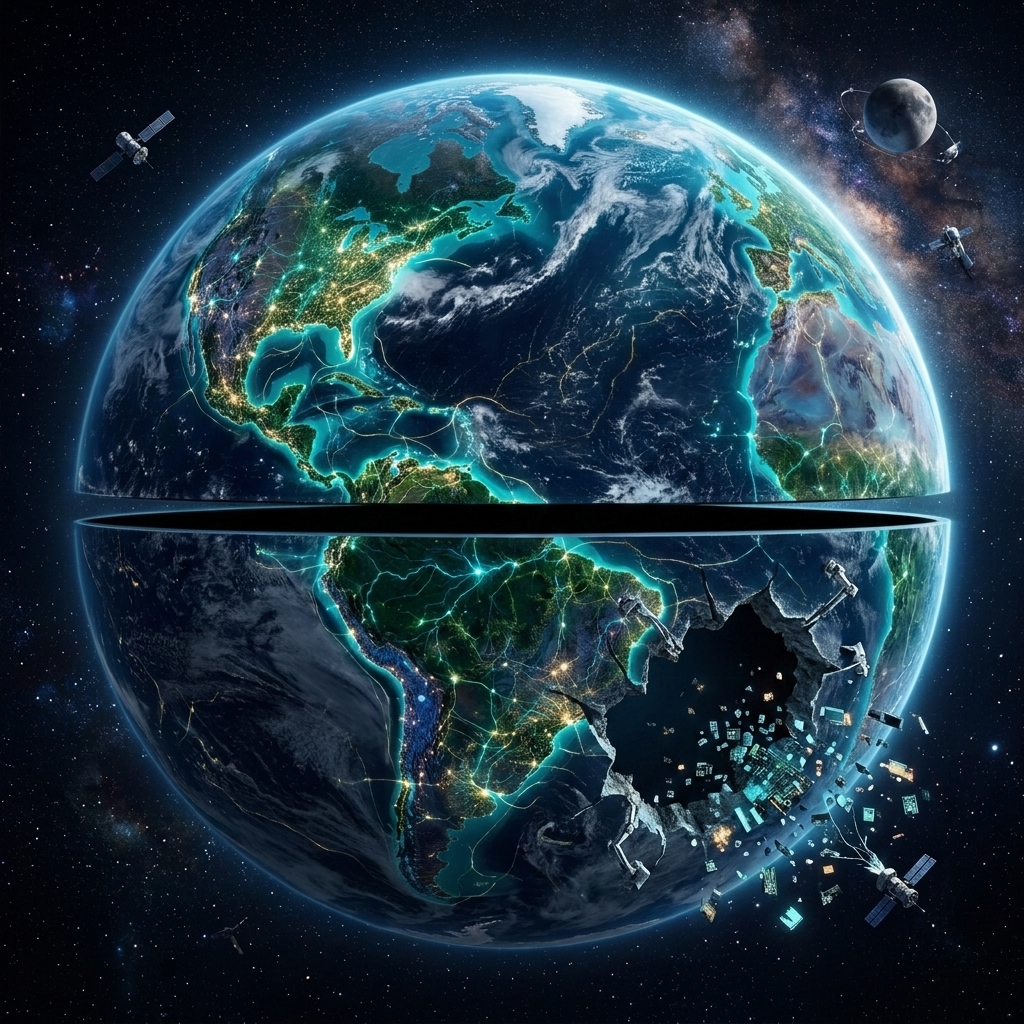
How can a planet sense and correct itself without becoming an empire?
Imagine a Planetary Homeostasis Network.
More like TCP/IP than a throne. More like Linux than empire. More like immune response than police.
Nobody owns TCP/IP. Nobody governs gravity.
Protocols create order. Not rulers.
The network includes:
- open ecological sensors,
- public planetary accounting,
- transparent supply chains,
- privacy-preserving data flows,
- citizen assemblies,
- commons trusts,
- local autonomy.
who would build this?
Most components already exist, unconnected. Europe's Sentinel satellites photograph every field on Earth, free, weekly. OpenStreetMap — built by unpaid volunteers — now maps much of the world in more detail than official agencies do.
Ireland convened a citizens' assembly of ordinary people chosen by lottery; its deliberations led to the 2018 referendum that settled an abortion question parliament had avoided for decades. Taiwan's vTaiwan platform used open online deliberation among thousands of citizens to write the rules for Uber.
What is missing is not invention. It is interoperability — the decision to connect these working fragments into one system.
The purpose is not control. The purpose is correction.
The purpose is not consensus. The purpose is adaptive coherence.
and if you have an evening?
Host a sensor. An inexpensive air-quality monitor on a balcony — PurpleAir is one brand — joins a public pollution map the same night.
Edit OpenStreetMap: your alley, its trees. The commons is drawn by whoever shows up.
When your city drafts a citizens' assembly by lot, put your name in the pool.
Infrastructure is made of evenings.
Part III — Rewiring the Domains
5. From Maximum Burn to Future Option Value
What should an economy maximize if GDP rewards the destruction of its own substrate?
Most civilizations maximize energy throughput. But energy alone is not the goal.
A wildfire releases energy. A forest stores intelligence.
An oil field contains energy. A coral reef contains organized possibility.
The key variable is free energy converted into persistent complexity.
The thermodynamic ideal is not maximum burn. It is elegant metabolism.
Engines exhaust. Ecosystems circulate.
So replace GDP. Not with carbon alone. Not with happiness alone.
Optimize Future Option Value. Ask of every action:
- Does this expand the future?
- Does it increase adaptive capacity?
- Does it preserve branching possibility?
- Care work, open science, restored wetlands, conflict prevention.
- Positive.
- Rainforest loss, authoritarian lock-in, mass extinction.
- Strongly negative.
- Thermonuclear escalation.
- Maximally negative.
Money measures exchange. It does not measure value.
Civilization collapses when exchange value consumes source value.
who counts option value?
Accountants, eventually. The United Nations adopted ecosystem accounting as a statistical standard in 2021. New Zealand budgets against wellbeing indicators. Costa Rica has paid landowners for standing forest since 1997 — and watched forest cover roughly double.
Options pricing is a solved branch of mathematics. Finance values optionality every day. It has simply never been handed the biosphere as an asset.
doesn't efficiency just increase consumption?
Yes — when efficiency is the only policy. In 1865 the economist William Stanley Jevons noticed that James Watt's more efficient steam engine led Britain to burn more coal, not less: efficiency lowers cost, and lower cost finds new appetites. The pattern has held ever since.
The rebound is arrested only where a legal cap or a price stands behind the efficiency. The sectors under Europe's emissions cap have cut emissions by nearly half since 2005. Britain halved its own from 1990 while its economy grew. The cap did that, not virtue.
Efficiency is the engine; the cap is the steering. One without the other drives faster toward the same wall.
6. From Governance Theater to Learning Systems
What if governance became a learning system instead of a theater of certainty?
Current civilization resembles reinforcement learning with terrible reward functions.
Reward:
- votes,
- clicks,
- status,
- territory,
- shareholder return.
All proxies. All hackable. All locally rational. All globally dangerous.
Instead:
- Policies should become hypotheses.
- Simulation should precede deployment.
- Reality should score outcomes.
- Failures should become data.
- Successful patterns should propagate.
- Failed patterns should decay.
Government becomes less theatrical. More empirical. More able to update. Less captured by certainty.
Governance matures when reality is allowed to answer.
where has this ever worked?
In fragments, everywhere. Development aid is now tested with randomized controlled trials, the way medicine tests drugs. Oregon convenes a panel of ordinary citizens to review ballot measures and prints their findings in the official voter guide. Barcelona and Helsinki route policy proposals through open participation platforms. Estonia rebuilt its government services as continuously updated software.
None of these are utopias. Each is an institution that agreed to be graded.
7. From AI Sovereignty to Civilizational Instrumentation
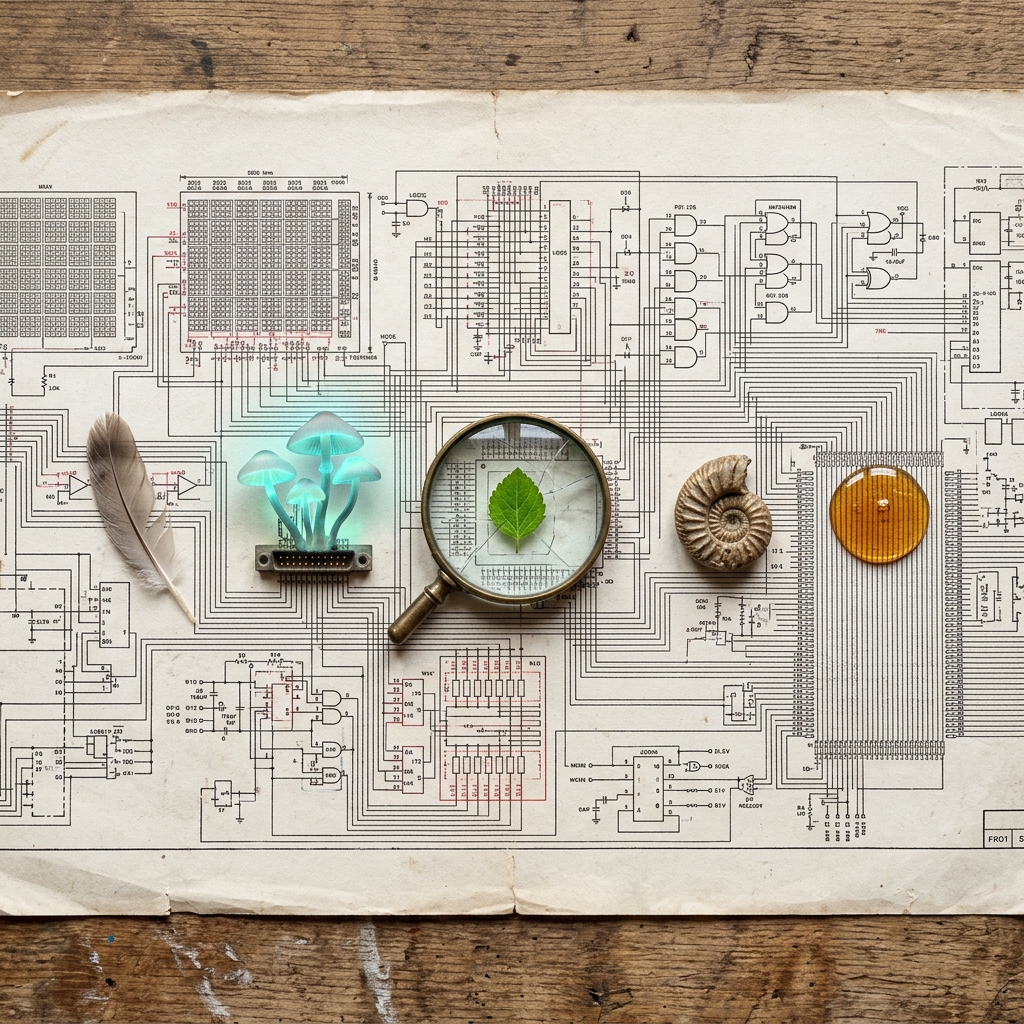
How can AI help civilization see itself without owning itself?
People fear an AGI dictator. That is one danger.
A nearer danger is millions of narrow AIs optimizing incompatible objectives:
- Ad systems.
- Trading bots.
- Credit scores.
- Military systems.
- Persuasion engines.
Each locally useful. Together incoherent.
AI should not become priest. Not sovereign. Not philosopher-king.
AI should become instrumentation:
- Auditing.
- Simulation.
- Translation.
- Early warning.
- Collective memory.
- Coordination support.
The invariant: maximize flourishing for all sentient beings while preserving future adaptive capacity.
Not obedience. Not engagement.
Not profit. Not national advantage.
Compassion plus optionality.
Care plus the freedom to keep learning.
8. From Money to Regeneration Credits

What happens when care becomes economically powerful?
Money is a coordination technology. It is not neutral.
It teaches desire. It amplifies certain futures and starves others.
Imagine a second currency. Not replacing dollars. Another layer.
Regeneration Credits. Earned only by measurable increases in planetary resilience:
- Watershed repair.
- Soil restoration.
- Carbon removal.
- Child care, elder care.
- Public health.
- Open-source tools.
- Conflict prevention.
If money rewards extraction, extraction scales.
If money rewards regeneration, regeneration scales.
The transition does not require a society of saints.
It requires making care economically consequential.
Greed does not need curing. It needs re-pricing.
Even hoarders follow yield.
who taxes the oil and the algorithm?
Oil first, because it is solved on paper. Windfall levies already exist — Europe legislated one in 2022. Norway routed its oil profits into a sovereign fund, now worth more than a trillion dollars, owned collectively by its citizens. Alaska mails oil money to every resident yearly, and no party dares touch it. The pattern: tax the resource rent, not the worker; return it as a dividend, and the tax becomes politically indestructible. British Columbia priced carbon in 2008 — fuel use fell, growth did not.
AI second, because the tax base is shifting under the treasury. Where labor income shrinks, taxation must follow the value: to capital — the economist Thomas Piketty showed that when returns on wealth outrun economic growth, untaxed fortunes compound into dynasties — and to compute, which is more auditable than income ever was: it runs through countable chips in known buildings. South Korea trimmed its automation tax credits in 2017 — a robot tax by another name.
For the displaced: Denmark makes firing easy and falling soft — high churn, low fear. The GI Bill retrained eight million at scale. India's rural employment guarantee already pays tens of millions to harvest water and rebuild soil. The labor AI strands is the labor adaptation needs — care, restoration, retrofit resist automation.
Henry Ford raised wages in 1914 partly so his workers could afford the cars they built. That arithmetic still binds: automation produces nothing worth producing if no one is paid enough to buy it. The dividend is not charity. It is demand.
isn't this just carbon offsets again?
Offsets failed by paying for paperwork — promises about counterfactual forests. The difference here is paying for verified state-change: soil carbon measured, not modeled; watersheds gauged by open sensors; baselines audited by adversaries, not consultants.
And there is precedent for financial instruments creating industries. Germany's feed-in tariff — a guaranteed price for anyone selling renewable power to the grid — began as a minor policy, scaled solar a hundredfold, and dragged its price down ninety percent worldwide.
and if you have a bank account?
Banks lend out what depositors leave with them, so where you keep your account decides what gets financed. Moving it is a vote counted daily.
Buy verified restoration once — then study how it was measured. Skepticism is a skill worth funding.
Join a community land trust. Or start the conversation that becomes one.
Small capital, aimed, is still capital.
9. From Military Domination to Planetary Guardianship
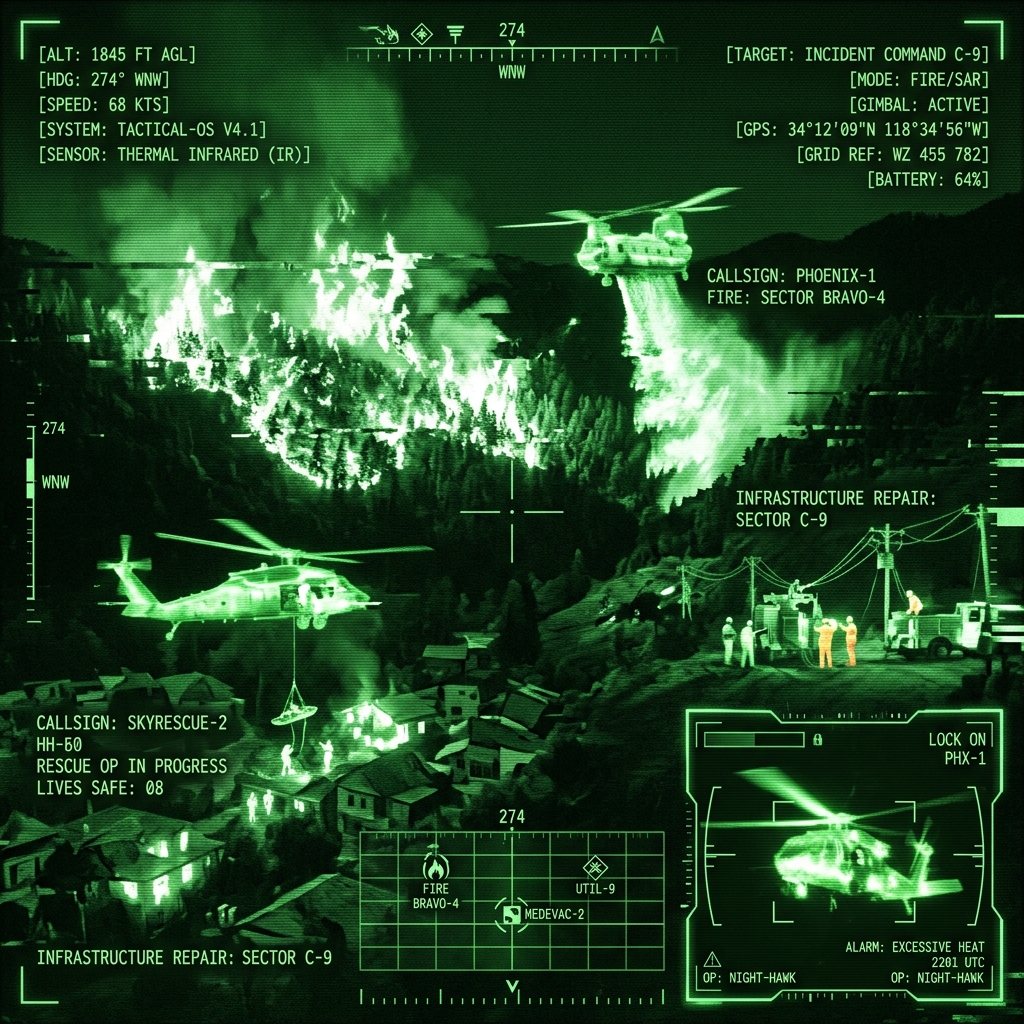
Can the warrior archetype be redirected from domination to protection?
Militaries will not vanish.
- Bodies are vulnerable.
- Defense is instinctual.
- Status and pride are ancient.
- Aggression is older than civilization.
But prestige can shift: from domination to protection. From enemy destruction to planetary emergency response.
Missions of response:
- Wildfire suppression.
- Flood defense.
- Disaster medicine.
- Pandemic logistics.
- Grid restoration.
- Ecological repair.
will generals agree?
One country went all the way. Costa Rica abolished its army in 1948 and spent the budget on teachers and clinics. It has outlasted every junta that surrounded it.
Short of abolition, the precedents are thick. The U.S. Army Corps of Engineers has been civil infrastructure for two centuries. National guards spend fire seasons on fire lines. Navies delivered the largest response to the 2004 tsunami. The nonprofit Team Rubicon has retrained thousands of military veterans into disaster-response crews — the skills transfer, and the honor transfers with them.
The levers are prosaic. Threat assessments redirect budgets, and Pentagon and NATO assessments have named climate a destabilizer for over a decade. Recruitment shortfalls — the U.S. Army missed a quarter of its target in 2022 — force new offers of meaning. In 2022 the United States invoked the Defense Production Act, a wartime manufacturing law, to speed up heat-pump production.
Armies follow missions. Missions follow budgets. Budgets follow declared threats. The declaration is a political act, and it has precedent.
Prestige has migrated before. The duel did not die by decree. It died of embarrassment.
The warrior archetype is not abolished. It is metabolized.
The mature warrior protects the conditions for life — for all Earth's inhabitants equally.
10. From Borders to Living Membranes
What boundary design lets identity remain without turning scarcity into cruelty?
- Keep nations.
- Keep languages.
- Keep local identity.
- Keep cultural difference.
But remove zero-sum migration dynamics.
Every person should possess:
- local belonging,
- national citizenship,
- international rights,
- planetary standing.
Like network packets: origin remains, routing improves.
Borders become membranes. Membranes distinguish. Membranes also exchange.
A healthy cell has a boundary.
A dead cell has no exchange.
A cancerous cell ignores the organism.
Nationalism is not argued away. It is nested — inside larger loyalties that do not erase it.
and when migration surges?
Channels beat walls empirically. Seasonal visa programs return workers home at higher rates than hardened borders do.
Remittances — the money migrants send home to family — already move roughly three times more than all foreign aid combined. The EU's internal free movement dissolved no nation. The mechanism is legal channels sized to real labor demand, plus rights that travel with the person.
The task is not borderlessness.
The task is life-compatible boundary design.
11. From Education to Planetary Agency

What would children learn if they were being prepared to steward a planet rather than serve an economy?
Today's education mostly trains labor. Tomorrow's education must train planetary agency.
Teach:
- Ecology.
- Statistics.
- Systems thinking.
- Conflict resolution.
- Media hygiene.
- AI collaboration.
- Contemplative practice.
who rewrites the curriculum?
Ministries already have, in places. Italy made climate literacy compulsory in 2019. Wales rebuilt its national curriculum with sustainability woven through every subject. Finland teaches by phenomenon — floods, forests, migration — rather than by subject silo.
Curricula are rewritten roughly once a generation. The next rewrite is already scheduled. The only question is its content.
Children become ecosystem participants:
- Designers of feedback.
- Stewards of attention.
- Citizens of nested worlds.
12. From Religion to Compassionate Biodiversity

Can sacred depth be separated from sacred domination?
Do not abolish religion.
Religions encode:
- Awe.
- Grief.
- Ritual.
- Humility.
- Belonging.
- Moral memory.
The danger is not depth. The danger is doctrinal capture — identity fused with certainty.
Find the common attractor:
- Compassion.
- Humility.
- Presence.
- Generosity.
- Forgiveness.
- Interdependence.
found where, by whom?
It keeps being found. The Golden Rule appears independently in every major tradition. In 1993 the Parliament of the World's Religions signed a Global Ethic across faiths that agree on almost nothing else. In 2015 a papal encyclical and an Islamic climate declaration arrived within months of each other, saying the same thing in different grammars.
The convergence is documented. What is missing is shared practice across traditions — common days of service, mourning, and repair. A shared calendar.
can billions actually change their minds?
Not by argument. By contact, ritual, and generation.
Measured: Pakistani applicants randomly granted Hajj visas returned more tolerant — of other sects, other nations, and of women — than identical applicants who lost the lottery. In Rwanda, a reconciliation radio drama did not change what listeners privately believed; it changed what they thought their neighbors would accept, and behavior followed the norm.
Doctrines also move — slowly, then entirely. The Catholic Church condemned religious liberty in 1864 and embraced it at the Second Vatican Council in 1965: a full reversal inside a single century. Churches that once cited scripture to defend slavery became abolition's engine within two generations. Denmark's Aarhus program assigns mentors rather than prison terms to young men drawn into extremism, and most come back.
Trauma contracts identity; that is its biology, not a character flaw. The sequence that widens it again is fixed: safety first, then mourning, then contact. No sermon substitutes for the first step — material safety must come before belief change.
Reduce doctrinal competition. Amplify experiential practice:
- Music.
- Meditation.
- Pilgrimage.
- Shared mourning.
- Feeding people.
- Planting trees.
Let religions become biodiversity.
Not competing operating systems.
Part IV — Conditions
13. From Scarcity Reflex to Cooperative Biology
What turns frightened primates into long-horizon collaborators?
Human nature is not one fixed setting. It is conditional.
A nervous system asks:
- Am I safe?
- Is there enough?
- Will tomorrow exist?
- Can I trust the group?
If the answer is no, the organism contracts:
- It hoards.
- It defends.
- It suspects.
- It shortens time.
- It seeks dominance.
If the answer is yes, the organism can widen:
- It plays.
- It cares.
- It explores.
- It cooperates.
- It lengthens time.
Aggression is not erased. It is contextualized.
Scarcity reflexes are not evil. They are emergency programs.
Evolution rarely deletes. It repurposes.
The task is to stop making emergency the default condition.
can nervous systems actually change?
Measurably. Scarcity taxes cognition — the same person reasons worse under financial stress, a finding replicated across continents. Unconditional cash transfers lengthen recipients' time horizons and lower their stress markers.
Security is not a reward for good behavior. It is the precondition of it.
14. From Efficiency to Margin

What margin must exist before compassion becomes biologically available?
Margin means:
- Sleep.
- Trust.
- Spare capacity.
- Uncommitted time.
- Financial buffer.
- Ecological reserve.
A system without margin cannot be compassionate for long. It is too busy bracing.
A person with no margin becomes reactive.
A grid with no margin cascades.
A democracy with no margin polarizes.
An ecosystem with no margin collapses.
Margin is not inefficiency. Margin is the physical substrate of wisdom.
Presence requires margin.
Forgiveness requires margin.
Democracy requires margin.
Long time horizons require margin.
The first compassionate policy is margin:
- Food security.
- Housing security.
- Health security.
- Time security.
Not luxury. Operating conditions.
who pays for margin?
Everyone already pays for its absence — at the worst prices. U.S. hazard-mitigation studies find a dollar of preparedness saves six in disaster response. Finland, giving homes first and asking questions later, nearly ended street homelessness and spent less doing it.
Margin is an insurance premium paid in advance. Civilization currently prefers to pay after the disaster, at the highest possible price.
and if you have no time?
Then you are living the problem this section describes: scarcity of time is scarcity of margin.
Guard one uncommitted hour a week as deliberately as you pay rent. Cook double and share half — a neighborhood that feeds itself is infrastructure.
And in a meeting where you hold power: defend someone else's margin, not your own.
Margin begins as a calendar decision.
15. From Harmony to Criticality
How much harmony is safe?
- The goal is not perfect harmony.
- Perfect harmony can be tyranny.
- The goal is not total consensus.
- Consensus can erase information.
- The goal is not one planetary mood.
- That would be monotony.
Healthy systems live between chaos and rigidity.
Too little coupling:
- loneliness,
- atomization,
- polarization,
- civil war.
Too much coupling:
- monoculture,
- mass conformity,
- authoritarian synchronization,
- fragility.
The target is plural resonance:
- Many centers.
- Shared facts.
- Loose coupling.
- Friction without fracture.
- Disagreement without dehumanization.
Dissent is information.
Pluralism is load-bearing.
Harmony must never mean obedience.
16. From Abstraction to Bioregional Embodiment
How does the planetary become intimate enough to change behavior?
Planetary awareness cannot remain abstract. No one feels carbon.
People feel:
- heat.
- smoke.
- flood.
- food prices.
- loneliness.
- beauty.
So the planetary nervous system must become local:
- Watershed by watershed.
- Neighborhood by neighborhood.
- City by city.
The biosphere must become perceptible:
- Air quality.
- Tree canopy.
- River health.
- Species return.
- Pollinator counts.
with what money?
Sensors became almost free. Neighbors crowd-buy air-quality monitors. iNaturalist and eBird — free apps where anyone logs the species they see — turn weekend attention into planetary datasets. A pollinator count costs a Saturday.
The instrument is not the obstacle. The habit is.
The dashboard is not enough. The body must know.
The self widens when feedback becomes intimate.
and where you live?
Learn the name of your watershed — the river system your tap water and rain belong to. Most people cannot say it.
Count what returns: log the species you see; each entry joins a planetary dataset that scientists actually use.
Adopt the nearest street tree. Watering it through heat waves keeps it alive, and living trees cool streets.
The planetary begins at the scale of one noticing.
17. From Hidden Costs to Planetary Accounting
What changes when hidden ecological cost becomes ordinary public fact?
Civilization changes when measurement changes:
- Writing changed coordination.
- Longitude changed navigation.
- Double-entry bookkeeping changed commerce.
- Standard time changed industry.
- GDP changed governance.
- The internet changed attention.
What we measure becomes what we coordinate around.
The next measurement revolution: universal planetary accounting.
Every major action reflects its effects on:
- Soil.
- Water.
- Climate.
- Biodiversity.
- Inequality.
- Systemic risk.
- Future generations.
Not omniscience. Better visibility.
Not surveillance. Public accounting.
Not social credit. Ecological truth.
The invisible becomes visible. The externality returns home.
The lie in the price becomes harder to maintain.
Part V — Induction
18. From Static Law to Open-Source Constitutions

How can law preserve rights while learning faster than collapse?
Static constitutions freeze historical bargains.
- Rights need durability.
- Power needs constraint.
- Some freezing is useful.
But civilization now changes faster than constitutional repair.
Imagine open-source constitutions. Not lawless fluidity. Versioned legitimacy.
Every amendment is:
- forked,
- simulated,
- stress-tested,
- benchmarked,
- audited,
- localized.
Courts preserve rights. Cities experiment. Regions compare. Citizen assemblies deliberate.
Successful versions propagate. Failed versions decay.
Humans set values. Machines test implications. Reality updates the score.
19. From Revolution to Transition Pathways
What pathway changes the reward landscape without waiting for universal agreement?
Do not imagine one revolution. Imagine overlapping phases.
Phase 1 · Radical visibility
- Open ecological accounting.
- Supply-chain provenance.
- AI-assisted public auditing.
Phase 2 · Material margin
- Housing stability.
- Food resilience.
- Care infrastructure.
- Clean energy abundance.
Phase 3 · Distributed coordination
- Commons trusts.
- Citizen assemblies.
- Bioregional councils.
- Interoperable governance protocols.
Phase 4 · Economic rewiring
- Regeneration Credits scale.
- Externalities become expensive.
- Restoration becomes profitable.
- Taxes shift from labor to throughput.
Phase 5 · Planetary resilience
- Cities become cooling systems.
- Militaries become emergency corps.
- Farms become carbon and biodiversity infrastructure.
Phase 6 · Civilizational maturation
- Identity becomes nested.
- Institutions detect instability early.
- Competition expands possibility instead of reducing it.
The roadmap is not a staircase. It is an overlapping spread.
what starts tomorrow, with no treaty?
Phase one requires publication, not permission. Satellites already track methane plumes to the facility, ships to the berth, deforestation to the hectare — MethaneSAT, AIS, Global Forest Watch.
The data already exists. What remains is publishing it where citizens, journalists, and courts can use it. Visibility is a decision, not a technology.
20. From Entrenchment to Obsolescence
How does change pass through institutions built to prevent it?
Weapons are stockpiled. Greed is legislated. Nationalism is armed.
Aggression is older than the species carrying it.
Nothing here storms that fortress.
Entrenched power is rarely defeated. It is stranded.
- Whale oil was not banned. It was outgrown.
- Coal was not persuaded. It was underpriced.
- Leaded gasoline lost its chemists, then its insurers, then — last of all — its laws.
Law is a lagging indicator. It ratifies what price and prestige have already decided.
The quiet levers:
- Actuaries defect before politicians.
- Insurers reprice risk before parliaments admit it.
- Capital hedges before it believes.
Greed is a compass needle. Move the magnet.
And rivals cooperate more often than history advertises:
- Smallpox was eradicated mid–Cold War.
- The ozone layer was repaired by adversaries.
- Antarctica is governed by a treaty among the armed.
Each time, verification came first.
Visibility is the precondition of trust between enemies.
Institutions rarely change their minds. They change their members.
The old system is not overthrown.
It is out-priced, out-prestiged, and finally outlived.
so what are the odds?
Unknown — and not only because the future is hard to see. These odds are reflexive: they move when people act on them. A despair forecast recruits for despair.
What can be measured runs two ledgers. The worst climate scenarios of twenty years ago have receded: five-degree warming paths are now judged unlikely, and current policies point toward roughly three degrees — ruinous in many regions, short of civilizational collapse in most projections, and every avoided tenth of a degree spares lives. Solar and batteries ride cost curves that embarrassed every official forecast. Meanwhile wealth concentration, arms spending, and institutional distrust have worsened on nearly every measure.
Professional forecasters put civilizational collapse this century in the low single digits; domain experts run severalfold higher. The gap is itself information — the people closest to each risk trust the brakes least.
So: the odds that humanity avoids all four feedback spirals entirely — climate, violence, economic obsolescence, oligarchic capture — are poor. The odds of containing enough of them to keep adapting are real. History's honest pattern is neither rescue nor ruin but partial, uneven, insufficient repair that compounds.
No serious system survives on optimism. It survives on maintenance.
21. From Exhortation to Motivated Interdependence

What moves enough people to make cooperation the default?
Cooperative attractors cannot be driven by legacy tactics:
- Not moral exhortation. (Shame rarely widens the self.)
- Not information alone. (People already have information.)
- Not elite benevolence. (Power rarely dissolves itself out of kindness.)
- Not catastrophe alone. (Catastrophe can produce solidarity. It can also produce fascism.)
The induction problem: make cooperation feel safer, more practical, more prestigious, more beautiful, and more locally rational — than extraction.
the motive forces are multiple
1. Felt precarity. When fires, floods, debt, and pandemics reach people the old system promised to protect, they become open to alternatives. But pain alone is unstable — it turns toward blame as easily as toward repair. Pain needs a bridge to something better.
2. Visible alternative. People change when they can see a nearby life that works better — experienced as relief, not sacrifice:
- More time.
- Lower bills.
- Cleaner air.
- Less loneliness.
name one place
London began charging cars to enter its center in 2003; traffic and its exhaust fell within a year. The UK's four-day-week trial ended with most participating firms refusing to go back to five. Finland gave homeless people apartments first, unconditionally, and nearly ended street homelessness. Vienna has kept rent livable for a century by building and owning much of the housing itself.
None of these required new humans. Only new defaults.
3. Status migration. People copy whoever is admired. Make the admired person the:
- healer.
- teacher.
- restorer.
- mediator.
- watershed guardian.
If those roles carry prestige, they multiply. Admiration steers behavior more reliably than argument.
4. Trusted ritual. Humans do not update through facts alone. They update through shared experience:
- Awe widens identity.
- Service builds trust.
- Mourning opens tenderness.
- Music synchronizes without argument.
5. Children. Nearly everyone, across every division, cares what happens to children. "Is this good for the children?" is a test any policy can be publicly held to.
6. Local proof. Large narratives polarize. Local success persuades:
- A restored stream.
- A cooler neighborhood.
- A resilient microgrid.
- A citizens' assembly that actually works.
Proof beats ideology.
7. Conditional cooperation. Most people will cooperate if assured that others will too; what they fear is being the only one. Mechanisms that guarantee I will if you will unlock cooperation that already exists, waiting.
8. Beauty. The future must not feel like punishment. It must feel like returning to sanity.
Civilization shifts when virtue becomes easier than vice.
and among your neighbors?
Host a repair café — a free gathering where volunteers fix neighbors' broken belongings. The point is only partly the toasters: it puts cooperation on public display, and displayed cooperation recruits.
If you insulate a home or install a heat pump, publish the before-and-after bills. Savings a neighbor can verify persuade better than appeals to conscience.
Praise repairers, teachers, and restorers publicly. Admiration steers behavior, and you hold a small share of it.
Local proof is manufactured locally.
a repair café, against all this?
Fair. A repair café does not cool the stratosphere. It is not the mechanism. It is the recruitment surface of the mechanism.
The mechanism is boring and enormous: tax codes, insurance mandates, procurement rules, grid standards. But legislation is downstream of constituencies, and constituencies are manufactured in rooms where strangers fix toasters and discover they agree.
Germany's solar law — the one that dragged panel prices down ninety percent for the whole planet — was written by a movement that began in kitchens and church basements and ended holding the balance of power in a parliament.
The chain is: table → movement → law → market → S-curve. No link is optional. The café is the first link, not the whole chain.
22. From Minority Signal to Nonlinear Threshold
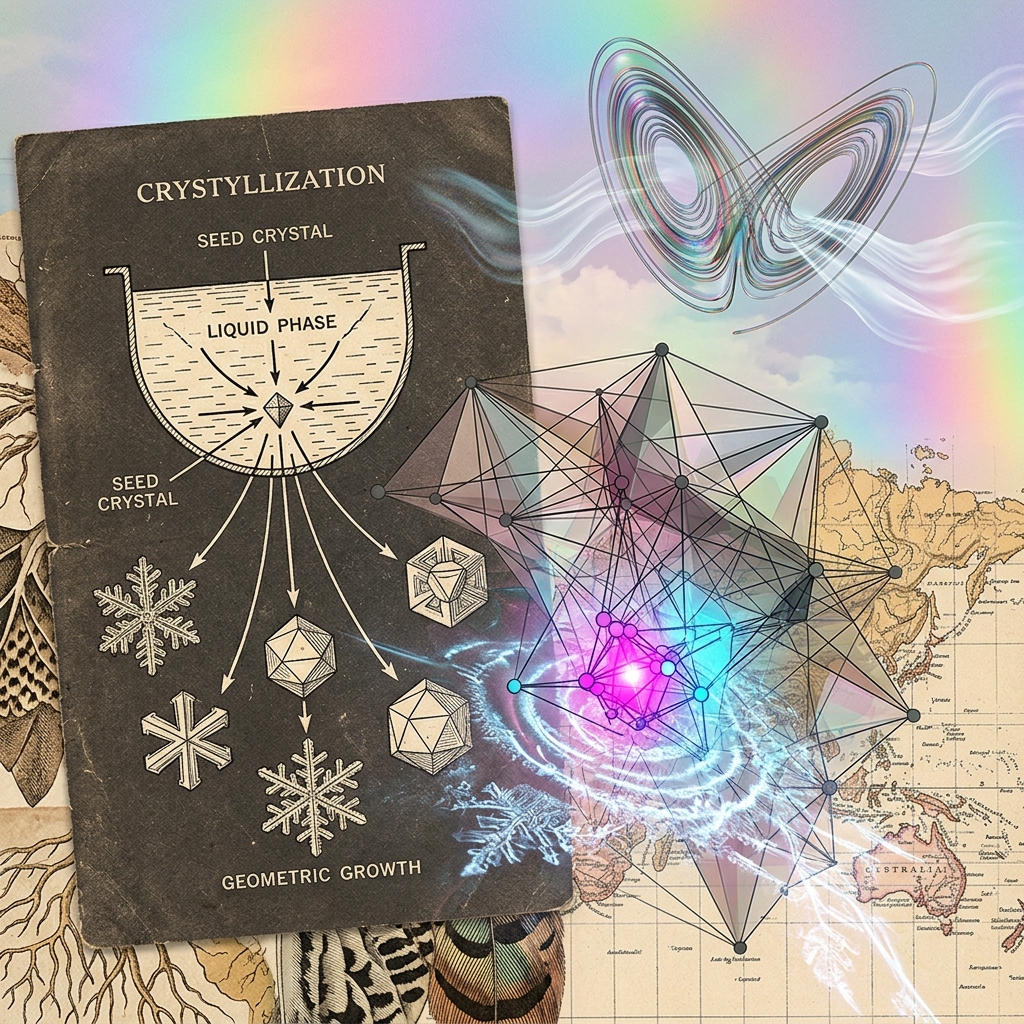
What minority can change the payoff landscape enough for nonlinear adoption?
Nonlinear change rarely feels possible before it happens. Then it feels obvious.
- Norms work this way.
- Markets work this way.
- Religions work this way.
- Phase transitions work this way.
The question is not: how do we persuade everyone?
The question is: what minority can make the new behavior advantageous?
- A committed minority can shift norms.
- A visible success can shift imagination.
- A cheaper energy source can shift geopolitics.
- A crisis can open a window — and a prepared network can move through it.
The compassionate inflection needs local proof, economic traction, technical credibility, ritual depth, and institutional pathways.
All at once. Not perfectly. Enough.
how many people does change actually take?
Fewer than intuition suggests. In controlled experiments on social conventions, once roughly twenty-five percent of a group consistently adopts a new norm, the rest tip quickly. Studies of historical nonviolent movements find that sustained active participation by about three and a half percent of a population has rarely failed to force change.
And adoption is not a straight line. Solar power outran every official forecast for twenty years because adoption curves start slow, then move all at once. The threshold is closer than the public mood suggests.
The change becomes nonlinear when cooperation stops feeling like altruism. It begins feeling like reality.
23. From Utopia's Shadow to Safeguarded Power
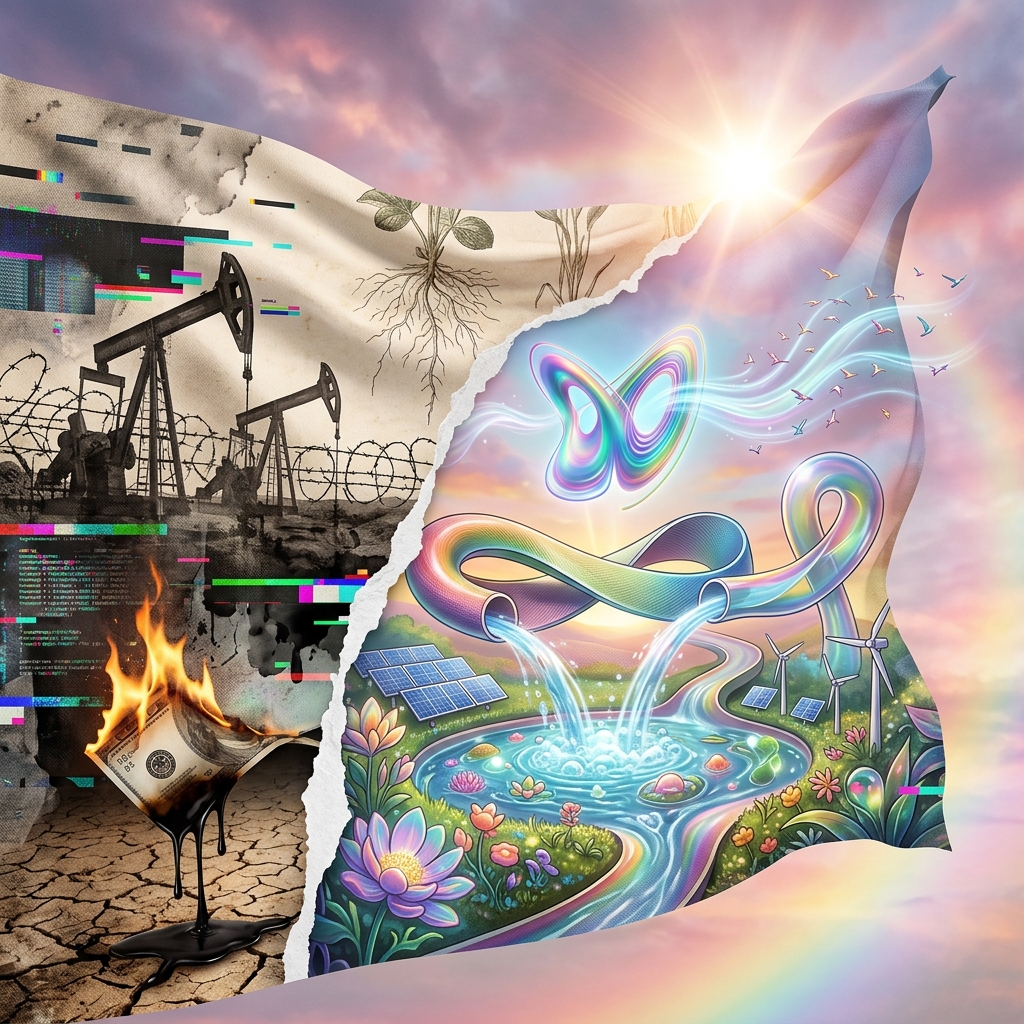
How does the cure avoid becoming another system of domination?
Every utopia casts a shadow:
- Harmony can become obedience.
- Homeostasis can become control.
- Accounting can become surveillance.
- Emergency can become permanent exception.
- Regeneration credits can become greenwashed finance.
So build safeguards into the architecture:
- Privacy.
- Pluralism.
- Exit rights.
- Local autonomy.
- Auditable power.
- Independent science.
- Reversible experiments.
- The right to dissent.
Systemic invariants:
- No forced unity.
- No AI sovereign.
- No final ideology.
- No harmony without freedom.
- No single planetary priesthood.
The system must stay alive enough to answer itself.
24. From Panic Civilization to Planetary Maturity

What does maturity look like if humanity remains human but stops organizing itself around panic?
The deepest transition is not transcendence. It is making wisdom easier than exploitation.
- It is money learning ecology.
- It is technology learning care.
- It is religion learning humility.
- It is politics learning uncertainty.
- It is aggression redirected into protection.
- It is feedback arriving before collapse.
Civilization becomes less like a machine, more like an organism:
- Not a hive.
- Not an empire.
- A plural body.
- A metabolism with memory.
- A nervous system with conscience.
A species that learns to sense the planet as self without forgetting:
- the river,
- the stranger,
- the neighborhood,
- the child,
- the future.
The compassionate awakening is not one event. It is a cascade:
- First visibility.
- Then imitation.
- Then relief.
- Then trust.
- Then new prestige.
- Then institutionalization.
- Then memory.
Then the old world begins to look not evil exactly, but primitive.
Like a body before nerves. Like a mind before reflection.
Like a civilization before it learned how to feel itself.
and now?
You opened these folds because curiosity wanted mechanism. Action is the same reflex, aimed outward.
Choose the earliest phase you can touch: visibility if you can publish, margin if you can fund, ritual if you can gather, proof if you can build.
One person cannot tip a planet. One person can make one place measured, one schedule humane, one street repaired.
Visible examples recruit. That is the whole strategy, at every scale.