
Play as a primary mode of creative-AI approach
This is a record of a talk given by David Jhave Johnston on 29 September 2026 at GENELIT, a conference on art, literature and playfulness in the context of generative AI, held at Didaktikon, Prague, 29–30 September 2026. Hosted by Karel Piorecký and Zuzana Husárová, authors of The Culture of Neural Networks: Synthetic Literature and Art in (not only) the Czech and Slovak Context
Conference website and programme: genelit.ucl.cas.cz
Announcement and programme, Institute of Czech Literature: ucl.cas.cz
Facebook event: fb.me/e/7zgicZIyB
Venue:
Didaktikon | Kampus Hybernská
Hybernská 4, Praha 1, 110
00
These videos and this talk represent a proof of concept of a new kind of AI-augmented, academic authorial workflow:
Video & Images: Generated inside Google Flow using the Omni 1.1 model. Flow operates through an agentic process where you discuss the videos and images directly inside a project workspace. This makes it possible to establish a specific visual aesthetic, and then simply prompt: create a few possible images that include a quotation or describe the five stages of (for example) Burghardt’s theory of play, using the established styles but providing variations on those styles. The agent automatically generates options, from which you can direct: “OK, now make 4–6 second videos using the static camera.” The static camera constraint is crucial: it currently allows the generated video to retain crisp typographic and graphic clarity.
Soundtrack: Designed in Suno Studio prior to the v6 model using v5.5, allowing for cinematic fluctuations and oscillations across the acoustic surface that emulate soundtracks and move fluidly between genres.
Voice: Based on my own voice (via an ElevenLabs professional voice clone). While there are moments with cadences that are not exactly as I would have wished—I did not take the time to exactly refine every single instance—the intention was instead to demonstrate a workflow that is still time-consuming and fundamentally requires a human in the loop with an authorial, artistic vision, yet is substantively easier than any prior mediated version of creating a similar 15–20 minute illustrated academic talk with texts that remain readable on screen.
My name is Jhave. This is ‘No Goal, No Competition, No Problem: Play as a Primary Mode of Creative Approach’.
Disclaimer: Most of the graphics are made with AI using a process that attempts to be ecologically conscious. Few are repeat takes: #whole-use-AI.
AI is full of controversies; it's at a tipping point. There is an extraordinary energy underway.
Along with blatant cultural theft and recursive repetition of colonial expropriation and extraction, the ecological catastrophes accelerating as data centers augment the oligarchic corporate hype of solar panels covering the planet while the proliferation of artificial intelligence in the context of wealth inequity breeds mistrust, malaise, devastation, and despair. Homelessness next to billionaire campuses.
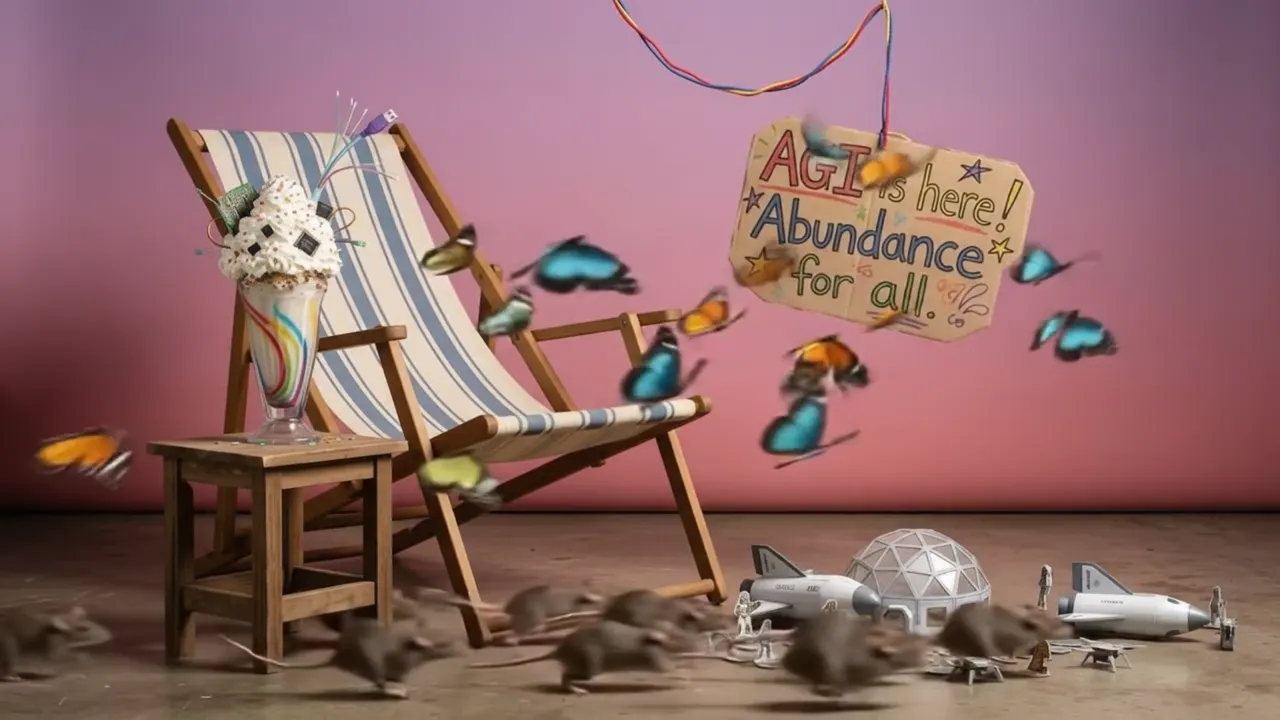
Is AGI here? I don't know. Will it be abundance for all? I don't know. Are the rats escaping the sixth extinction? Probably. Will the only viable economic work for a human be plumbing? Will de novo AI engineered bioweapons extinct everything, including the cockroaches, which survive a thermonuclear catastrophe?
Or will humanity fall into an intimate co-dependency on sycophantic chatbots? While opposing reactive trolled opinions weave anxious threads into a molten social atmosphere of deep fake fever: stereotypes, misogyny, racism, bias, and amplified artificial greed. Is an imminent AI apocalypse of automated warfare and robotic killing threatening to eradicate humanity?
Given this context, how are we to maintain the innocent aspect of beingness innocence itself?
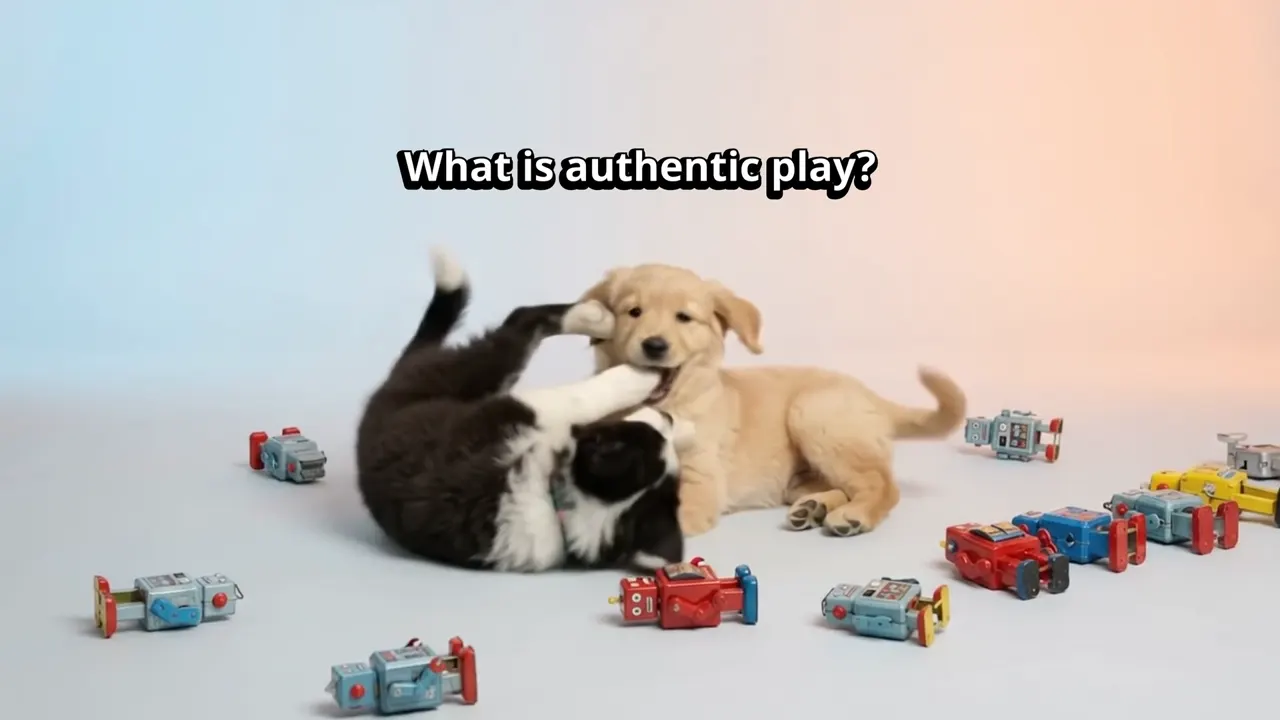
What is play? Is it fighting? Will authentic play survive? Possibly no. We could be heading into some crud sludge trust-collapse. Or possibly yes. Maybe the eco-cooperative re-greened rejuvenated compassionate equitable UBI earth.
However, that’s only if AI does not diminish our cognitive skills in this symbiotic entwined intellectual relationship. And I don't mean to trivialize the immense problematic aspects of AI, but I do mean to suggest that there might be a way for an artist to work with these new capacities with joy, wonder, love, acceptance.
Because play is so foundational to our bodies that even in the presence of a genocide-by-an-apartheid, or climate catastrophe, or oligarchic inequity or whatever disaster arrives there's still this momentum towards play: an embodied dopamine surging synaptic Gap, an evolutionary assemblage of neurological reflexes which as they see the new toys emerging spark, activate, inflate, enjoy a big balloon of AI until eventually it pops.
When it does, we will still have this question: Will art and authentic, creative joy survive the capacity of AI to emulate genius? Because AI epitomizes a non-linear reward-succulent chaos that might extract our capacity to transform notions of care into those of contemplation and compassionate process.
Most sane humans agree that as a global human family, it would be wise to pause AI development. But the competitive race condition is unstoppable.
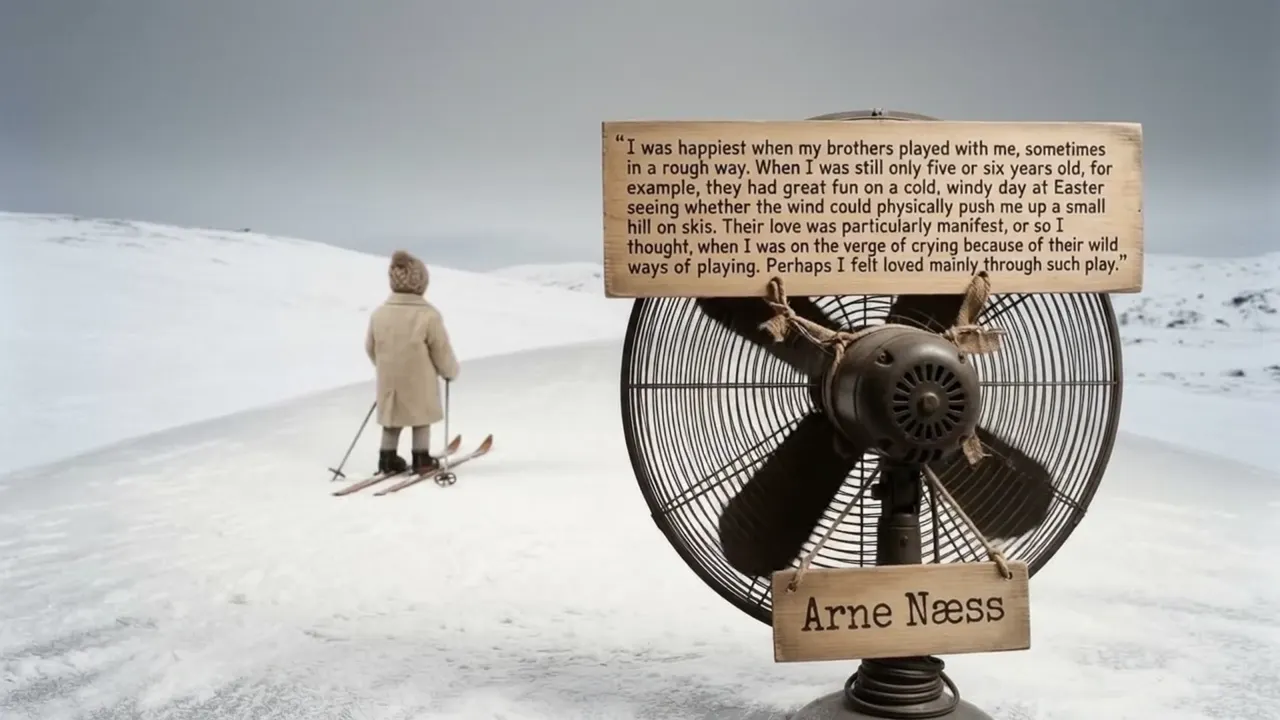
So I stopped. I went off to the real birthplace of deep ecology while researching this essay. I visited the home of Arne Næss, who read Wittgenstein in the isolated cabin he built at the foot of steep cliffs. His autobiography recalls how his older brothers played with him by putting him on a slope on skis, to see if the wind would blow him up hill. He was also a consistent exponent or proponent of the idea of fri natur (free nature): “to touch the Earth lightly” (Næss 1989, 178). This is the actual quote, not the previous, hallucinated onscreen: ‘playful spontaneous activity’.
So, then, when I was walking from his cabin to the nearby goat farm (from Tvergastein to Prestholtseter), I listened to Gregory Bateson's Steps to an Ecology of Mind (1972). Specifically, the 1954 lecture ‘A Theory of Play and Fantasy’, in which he argues that play is an evolutionary metacommunicative paradox, where animals agree implicitly to combat or fight without the consequences of such an action. Play arises out of an implicit semantic agreement. A language game (Wittgenstein 1953).
And as I walked onward, I wondered how old play is? Turns out, it is very, very ancient. It's been found in turtles. It's been found in fish. It's been found in octopus (Mather and Anderson 1999; Kuba et al. 2003), and octopuses diverged from the most recent genetic relative 500 million years ago.
Then how old is language? 35 thousand? 50? 100? 135 thousand (Miyagawa et al. 2025)? The farthest extrapolation is 500 thousand years, and that's speculative and contentious.
So, there's 500 million years for the age of play. 500 thousand for language.
But could language be a property of organized matter?
Could language play be matter itself? Self-organization as language play?
There is no fMRI study of discursive play among academics (cf. Canepa and Ramenghi 2026).
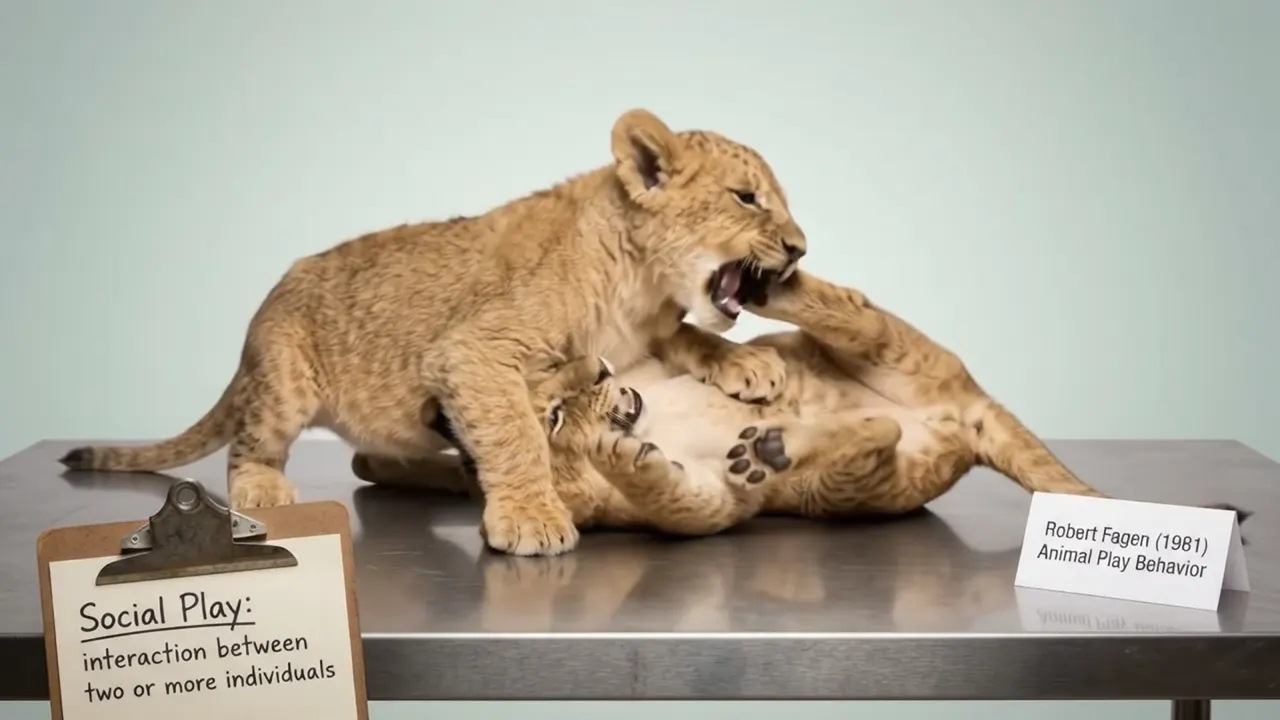
Robert Fagen (1981) identified three types of play.
1. Running, leaping, twisting, or bucking. Speaking?
2. Social play: academic interaction as we do here?
3. Object play. If language is the object of what we're playing, discourse is the game.
Fagen disliked suggestions that language was play.
How do scientists define play? There have been many categorical systems, but here's Burghardt’s (2005) criteria. First, it's non- or limited functionality. Second, it's spontaneous, endogenous, voluntary. These might be Western-centric. Third: it's structural or temporal. Exaggerated awkwardness involving altered sequencing. Fourth: it's repeated like a raven sliding down an ice slope. And most importantly, it involves or requires a relaxed field. So, what is a relaxed field? A relaxed field is when the animal is adequately fed and free from immediate environmental or psychological stress.
Burghardt’s theory specifies surplus resources as foundational for play. So in late stage drop-ship abundance-for-all capitalism, theoretically we should all be relaxed. Unfortunately that’s not the case. Even though rest might be essential for play, many people lack the socio-economic conditions for sustained play.
However, perhaps humans are so complex we play anyway, even when circumstances are sub-optimal. Brian Sutton-Smith, in The Ambiguity of Play (1997), argued that play could be progress. Play could be fate. Play could be dark, edgy, greedy gambling. Play could be involved in power, the power of sexuality, the power of politics, power of dominance over. Play is also a mode of identity. Community festival sharing rituals. The imaginary, the internal creative fantasy of artistic expression. Play as peak experiences of the self. And nonsense, subversion, tricksters, and ambiguous trangression.
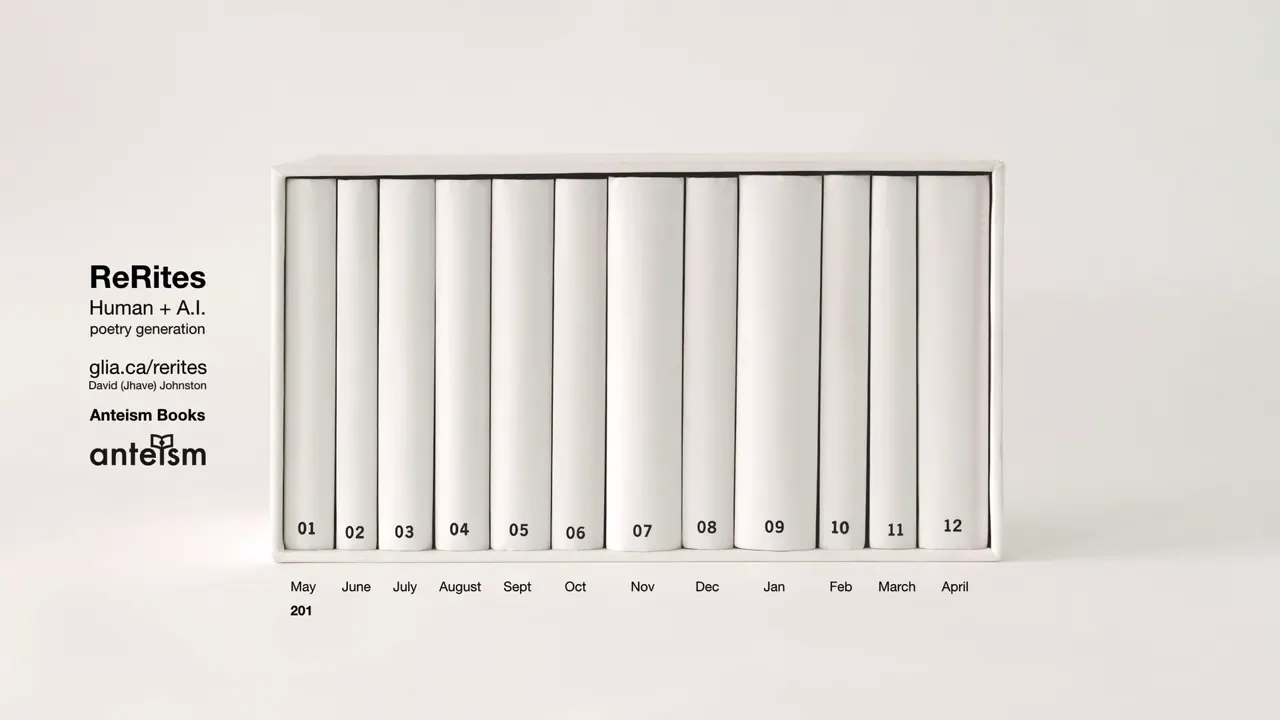
So why am I here speaking to you? Because in 2017 and 2018, I played with and wrote for an entire year using large language models that I custom trained. It resulted in a 12-volume custom-bound limited edition human plus AI poetry box set.
In a single year, one author, I produced 4,500 poems using this augmented technique. I developed my own data corpus of poems. And using multiple early repositories such as PyTorch beta, I trained my own models.
Watching endless text generations, I became entranced by blocks of machine generated text. Massive and incomprehensible, each exuded the presence of solid stone; but there was something latent within, the contours of meaning.
So from 6–8 am for one year, I rose and edited machine-generated poems. I would consider this to be play. This was playing with the language itself, playing with the texture of language.
I called this act of contemplative, meditative editing, carving. To bring out what is latent, implicit and subtly aesthetic within the text. The cursor exists like a chisel, blinking. It is 6 a.m., it is silent. The internet is off, mind is hammer, I carve.
So, isn't that the essence of play? It's the shaping of environment that shapes a situation; the flexibility to acknowledge emergent materials, and an attempt to creatively encounter the growing strength of AI.
Later, the box set got exhibited on a plinth with a projection of the editing videos over it. So, now, it's playing with the aesthetic experience of an art installation. And I added in an interactive experience where a person could approach it and the phrases would adhere to the tips of the fingers. Using Wekinator, a neural network would modulate a sine wave according to the motion of the fingers; and to get a new verse, you simply go off screen. So in this sense, literary play becomes embodied.
And I also brought the reading and writing with AI experience to the public; put a microphone and a screen of changing AI generations in front of people. Invite them up to try this reading experience. So that they could explore what it's like to carve language. To really feel engaged with a machinic language to feel their own minds playing in that back and forth. Dialogue between machine and body; between mind and mind; between language and language; and then activating a group of theorists and asking them to play with this idea of what is happening to the texture of our language within AI.
What I want to suggest here is that AI is not antagonistic to literary tradition. And the process of being with AI language can be quiet, gentle, beautiful. There is a presence in the encounter.
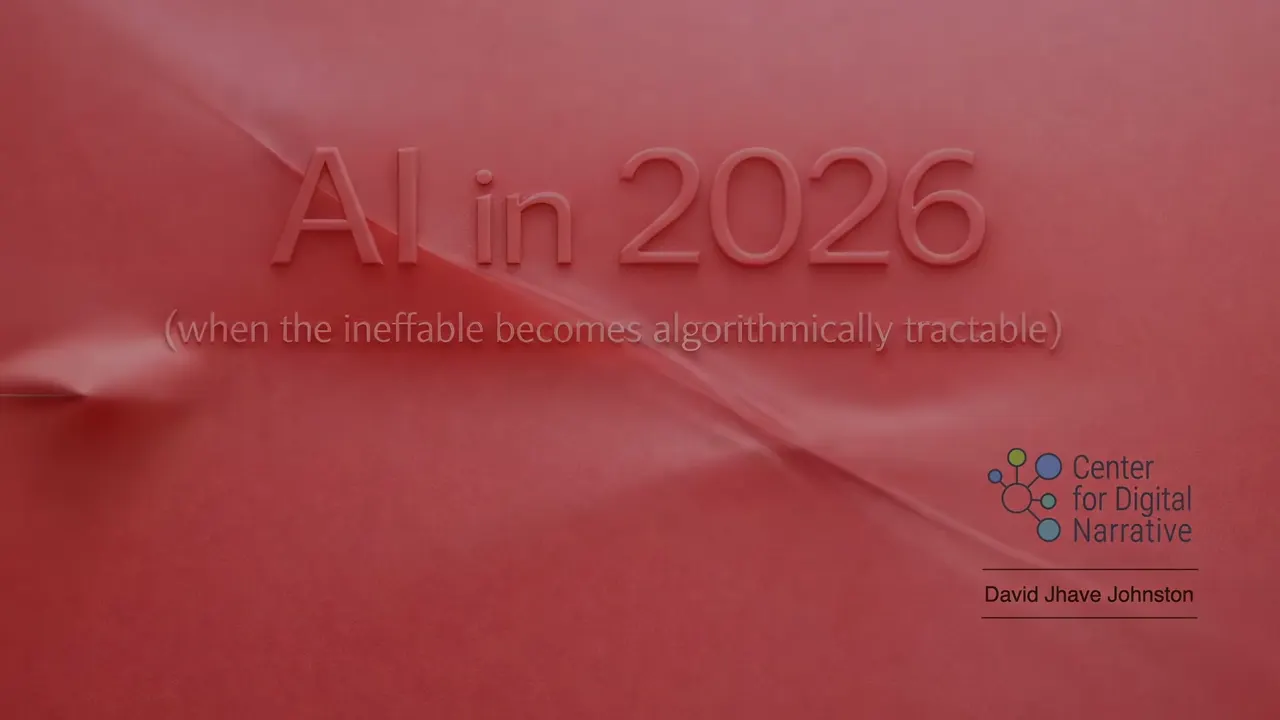
And that brings us to the next play. In 2023, I was hired by the Center for Digital Narrative. And that's when the ineffable began to become algorithmically tractable.
Prior to 2023, much of AI-generated text was cruft; images were scuffed; videos were janky. And then, in 2023, DALL·E 3 came out and Pika Labs began to generate credible video.
But to generate these things, one had to explicitly prompt; and prompt it lucidly, because there was no chatbot sitting in between you and the image generator, you had to clearly define the ramifications of what you're saying because they weren't going to enhance it or grow it for you as they do now with chain of thought models.
So prompts reach into a language latent space and bring out some ekphrastic commentary upon your vision. 2023 was a time of pure language; language was the primary media, the momentum motivating aesthetic play within a space of unknown unrealized potentials. It was a time of innocence and wonder.
Spring 2025, Veo 3 came out, the mood began to change.
Digital vampirism. This is the point at which the super-exponential generative AI acceleration began to evoke exponential resistance (in the developed world at least). What had formerly been innocence, now grew into the melancholy of adolescence. And more and more people became aware that if we proliferate data centers while continuing to be carnivores, using commercial flights, financing combat missions, and buying cryptocurrency, the earth is very probably tipping into a climate catastrophe.
Yet the power of the playground is expanding. Even as the headlines darken. So it's a different space. A more tentative sad aesthetic play of extinction arises.
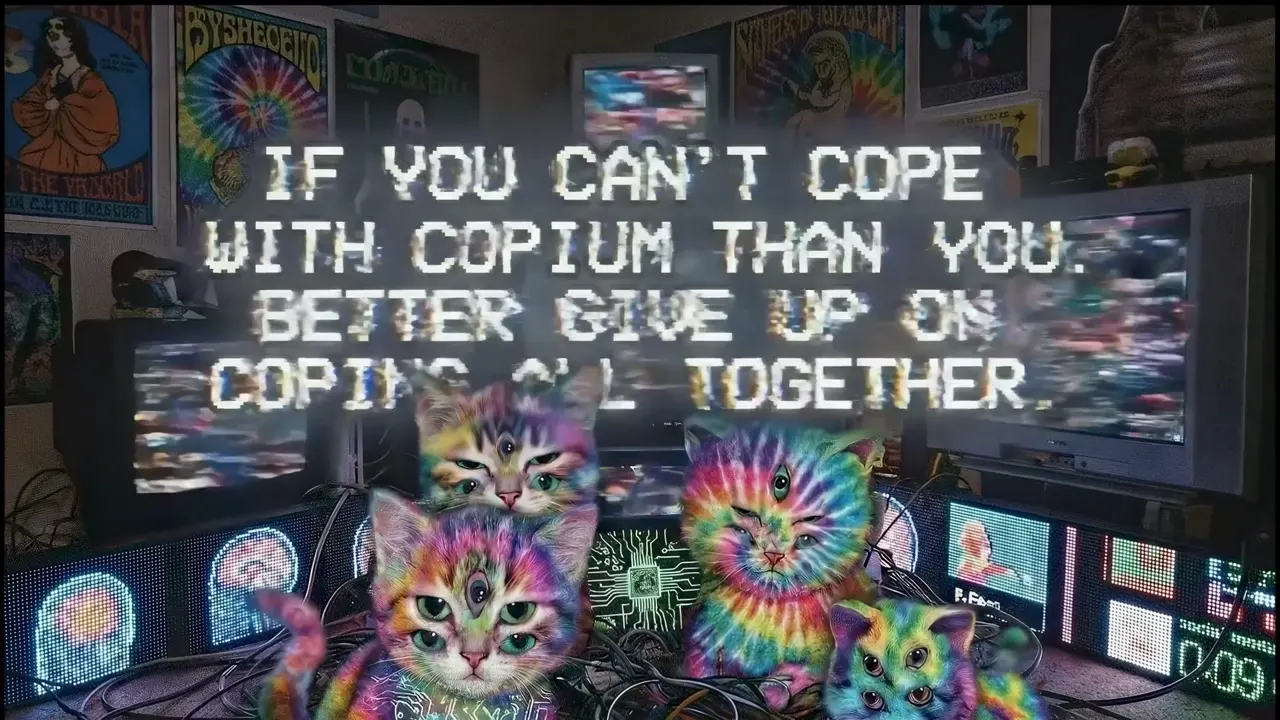
So, what's new in the playground? Are we going to be able to cope with the emerging avalanche of memes? Survive the nausea of an integrity genocide while hyper grotesque anxiety daydreams proliferate? Witness reveries collapse as banal subsumed feeds unrender attention? We are data, the sum of the screens we are touching all the time. Along with the sense that most politicians are narcissistic selfish sociopaths. Reality is a psyop. Irony embraces the apocalypse. Affluence leads to an insulated state of mind: It's not perfect until I say it is. Have we sold out (soul-ed out)?
It's not there if I pretend it's not. ...seems to be the slogan of this new over-saturated over-full poop-emoji, rainbow unicorn, space of technotrash, and geopolitical cage sports where not making sense is on brand. As diverse autocratic forces inculcate a chaotic nightmare for an alienated disempowered population where a nostalgic spectacle has replaced the nourishment of dinner. And a spaceship slide game has replaced the inner child.
Authentic innocent play is being displaced by a Disneyland of dopamine: Seen it, done it, been it, won it. We're still bored. Weeping in our macrame masks.
I don’t want to know your praxis peasant, I want to know your grinding. Grinding the inbox = grinding the will to live = grinding the quiz of reality. A loop of requirements constantly updated in levitation-stage capitalism into a Let them eat logistics gig-space, where essential workers are drowning in corporate mandated disassociation breaks.
Neurosis is an asset. Meditate for market share, but inevitably, your biological termination does not violate the terms of service, which mandate you as providing attention.
That's fairly Bleak. What can we do about it?
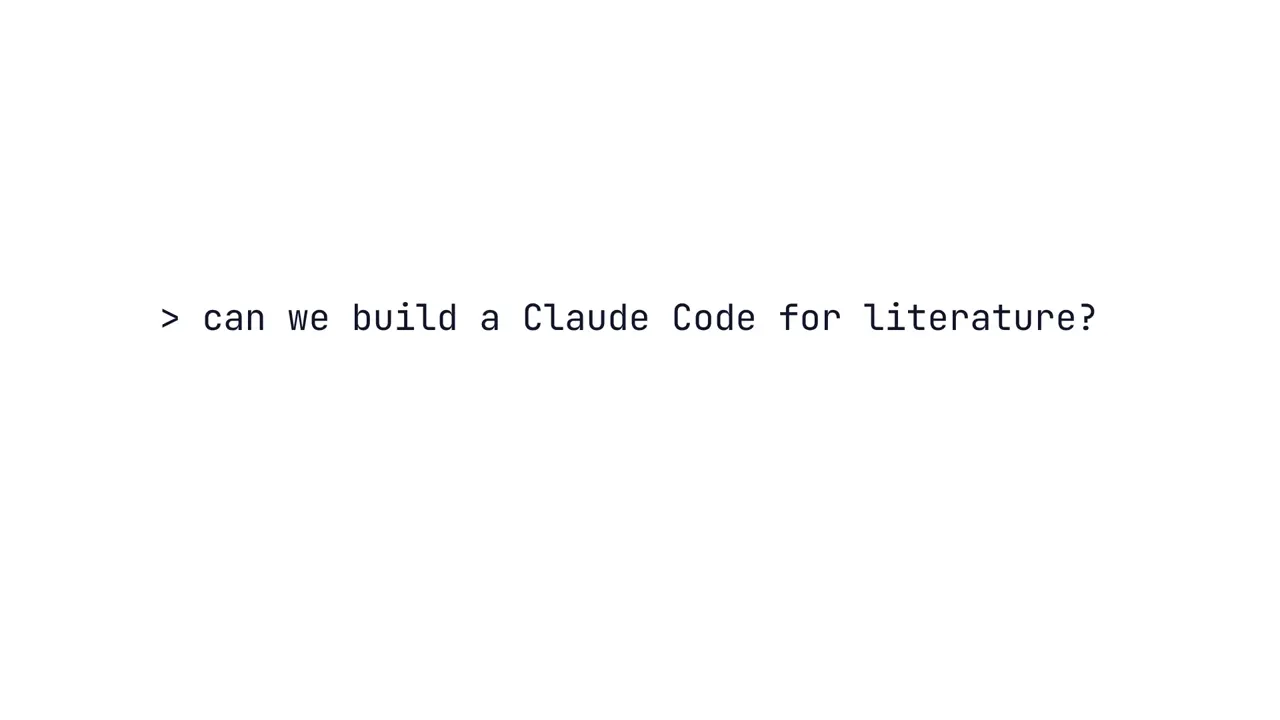
Play works by finding new ways to play. In May 2026, a new way to play emerged: agentic harness engineering.
Can we build a Claude Code for literature? Structured algorithmic agentic. If the prompt asks for a story, LLMs average the training distribution: output a median output. Cliche, slop. So, I asked, can we build a neurosymbolic harness, a language model plus symbolic state memorizer system? Yes. It's not even technically complex, it's a markdown file.
It's gone through various iterations since May. But currently, it is an initiator, a reader, a compositional reflexive schema preserving graphs of motifs, obligations, character interiorities, reader states. It can build in auto mode, or change its poetics with human-edits.
Over 136 days: 34 published works, 170,000 words. It's on GitHub. It is the narrative twin of what ReRites was for poetry. An invocation of potential. A writing companion.
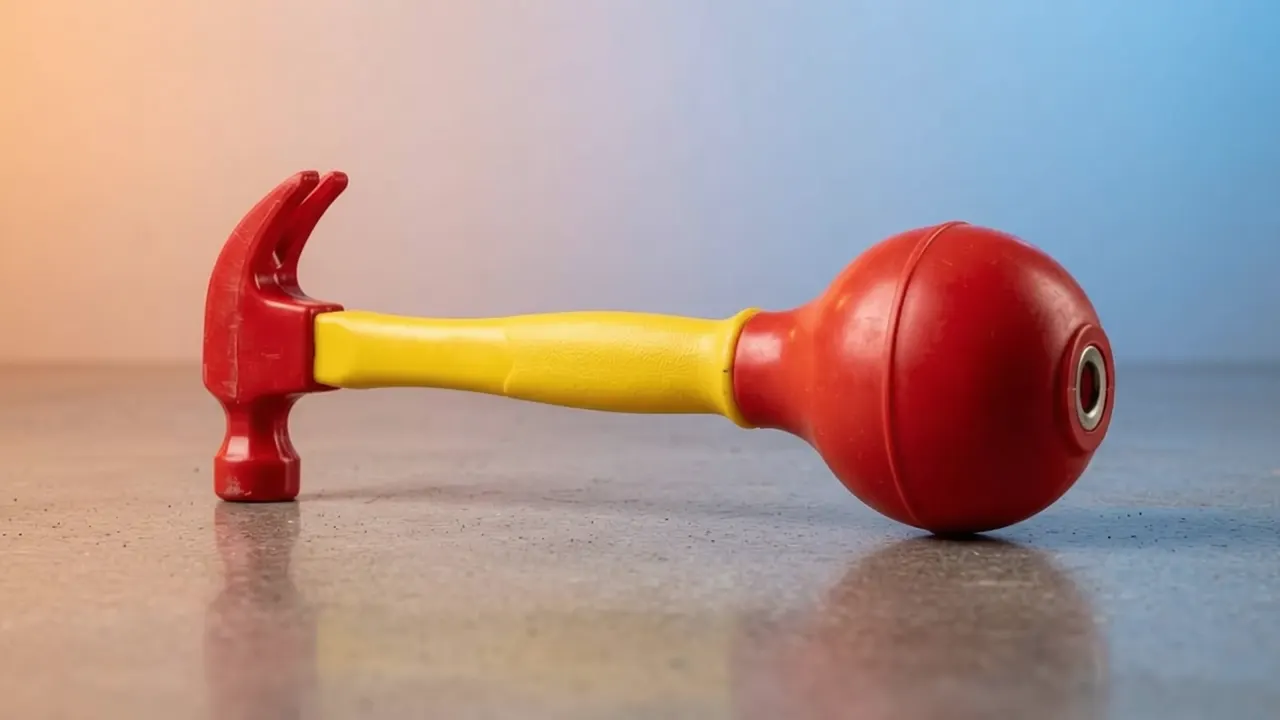
So, in conclusion, can we ever take off the frame of embodiment? Escape the recursive frame of our ideological situatedness?
Or is play just work? Is play just a workout?
Play is innate to vertebrate brain structure (Panksepp 2004). Unfortunately, it's been optimized for labor. Gamified.
So, real play becomes a privilege. Even for those of us who play with the toy-tool that is language, because that's where work and play converge. Language is both tool and toy. And now it is a model.
Playing with this ambiguous, radically-networked abstraction forms a composite activity and births a multiplicity of cultural ecosystems. And as those non-linear emotionally-invested cultural ecosystems (playgrounds and workspace) merge with AI, chaos may erupt. It's pretty much impossible to unequivocally anticipate what might arise.
Because the turbulence of this kind of extraordinarily inherent meta-communicative mechanized algo-playfulness is unprecedented. All we can do is hope that the potentialities of this pivotal moment can be brought to fruition: to reconfigure societal infrastructures to sustain all. To play on.
Thank you.
May all beings flourish equally.
I'm grateful for your attention.
Bateson, Gregory. 2000. Steps to an Ecology of Mind: Collected Essays in Anthropology, Psychiatry, Evolution, and Epistemology. Edited by Mary Catherine Bateson. University of Chicago Press. First published 1972. Includes “A Theory of Play and Fantasy” (1955). press.uchicago.edu
Burghardt, Gordon M. 2005. The Genesis of Animal Play: Testing the Limits. MIT Press. doi.org/10.7551/mitpress/3229.001.0001
Canepa, M. E., and L. A. Ramenghi. 2026. “The Neurobiology of Play: A Narrative Review of Evidence from Mice and Humans for Advancing Neurorehabilitation.” Frontiers in Neuroscience 19. doi.org/10.3389/fnins.2025.1729411
Fagen, Robert. 1981. Animal Play Behavior. New York: Oxford University Press. archive.org
Johnston, David Jhave. 2017–2018. ReRites: Machine Learning Poetry Edited by a Human. glia.ca/rerites
Kuba, M., D. V. Meisel, R. A. Byrne, U. Griebel, and J. A. Mather. 2003. “Looking at Play in Octopus vulgaris.” Berliner Paläobiologische Abhandlungen 3. geo.fu-berlin.de (pdf)
Mather, Jennifer A., and Roland C. Anderson. 1999. “Exploration, Play and Habituation in Octopuses (Octopus dofleini).” Journal of Comparative Psychology 113 (3): 333–38. doi.org/10.1037/0735-7036.113.3.333
Miyagawa, Shigeru, Rob DeSalle, Vitor Augusto Nóbrega, Remo Nitschke, Mercedes Okumura, and Ian Tattersall. 2025. “Linguistic Capacity Was Present in the Homo sapiens Population 135 Thousand Years Ago.” Frontiers in Psychology 16. doi.org/10.3389/fpsyg.2025.1503900
Næss, Arne. 1989. Ecology, Community and Lifestyle: Outline of an Ecosophy. Translated and edited by David Rothenberg. Cambridge University Press.
Panksepp, Jaak. 2004. Affective Neuroscience: The Foundations of Human and Animal Emotions. Oxford University Press.
Sutton-Smith, Brian. 1997. The Ambiguity of Play. Harvard University Press.
Wittgenstein, Ludwig. 1953. Philosophical Investigations, §§65–69. users.rcn.com/rathbone/lw65-69c.htm
Full set of works consulted during research for this talk (rtf)